 British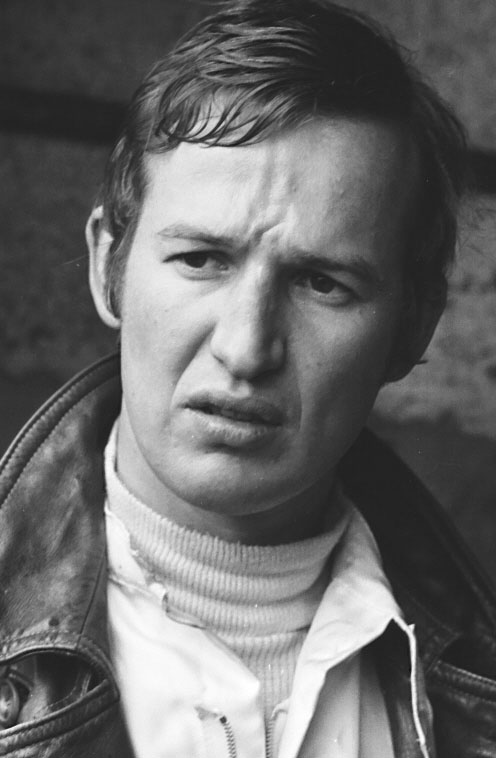
Signature numbers
- Win rate
- 0.0%
- Podium rate
- 0.0%
- Race starts
- 1
Era
About Robin Widdows
Robin Widdows: A Versatile British Racer
Robin Michael Widdows, born on May 27, 1942, in Cowley, Middlesex, emerged as a notable British racing driver whose career encompassed a broad spectrum of motorsport disciplines. His competitive journey saw him participate across Formula One, Formula Two, Formula Three, and various sportscar events, including the prestigious 24 Hours of Le Mans. Widdows' career, while not extensively documented at the highest echelons, is marked by a distinctive versatility and a unique dual sporting achievement that sets him apart in the history of competitive athletics.
Early Competitive Strides
Widdows' initial foray into competitive motorsport demonstrated an immediate aptitude for racing. He commenced his career piloting an MG Midget, a popular entry point for aspiring drivers, before progressing to a Lotus 23. This early period proved fruitful, as Widdows quickly established himself, culminating in a significant achievement in 1965 when he secured the Autosport Class C Championship. This early success provided a solid foundation for his ambitions in single-seater racing. The following year, 1966, marked his advancement into Formula Three, a crucial rung on the ladder towards professional motorsport. His progression continued swiftly, and by 1967, Widdows was competing in the highly competitive Formula Two category. Driving a Brabham BT23, he showcased his potential by clinching a notable victory, winning the Rhine Cup at Hockenheim. This triumph stood as a significant highlight in his formative years, underscoring his capability to perform at a high level within demanding international racing series.
A Brief Encounter with Formula One
The year 1968 presented Robin Widdows with his singular opportunity to compete in a Formula One World Championship Grand Prix. Having previously joined The Chequered Flag team to contest races in a McLaren M4A, his chance at the pinnacle of motorsport arrived at his home event: the British Grand Prix, held at the iconic Brands Hatch circuit. For this momentous occasion, Widdows was entered by Cooper, a team with a storied history in Formula One. Despite the significance of his Formula One debut, the race proved to be a challenging one. Widdows was unfortunately forced to retire from the Grand Prix due to ignition problems, an outcome that curtailed his participation and prevented him from completing the event. This single appearance, though brief and hampered by mechanical issues, cemented his place among those who have contested a Formula One World Championship race.
Sustained Engagement and Transition from Racing
Following his Formula One outing, Robin Widdows maintained his active involvement in motorsport. He returned to the demanding environment of Formula Two for the 1969 season, where he competed under the banner of Bob Gerard. Concurrently, his versatility was further highlighted by his participation in sportscar racing, where he drove for Matra, showcasing his adaptability across different vehicle types and endurance formats. Widdows continued his commitment to Formula Two into the 1970 season, once again piloting a Brabham. However, his active career in competitive racing concluded part way through this particular season, as he made the decision to retire from the sport. His departure marked the end of a racing career that, while not reaching sustained Formula One success, demonstrated a broad range of skills across various racing disciplines.
A Unique Sporting Distinction
Beyond his accomplishments in motorsport, Robin Widdows holds a truly rare distinction, placing him in an exclusive group of athletes. He is one of only six individuals known to have competed in both a Formula One World Championship race and the Olympic Games. His Olympic participation was in the challenging sport of bobsleigh, where he proudly represented his nation in two separate Winter Games, first in 1964 and again in 1968. This dual-sporting achievement underscores an extraordinary athletic prowess and competitive spirit that extended far beyond the confines of the racetrack. Further cementing his diverse sporting talents, Widdows also set a unique record on January 17, 1965. On this date, he became the fastest Englishman to ride the Cresta Run from Junction, achieving a remarkable time of 44.14 seconds during the Harjes Cartier Silver Chip handicap race. These extraordinary feats collectively paint a picture of Robin Widdows as a multi-talented competitor whose drive for excellence transcended traditional sporting boundaries.