

 American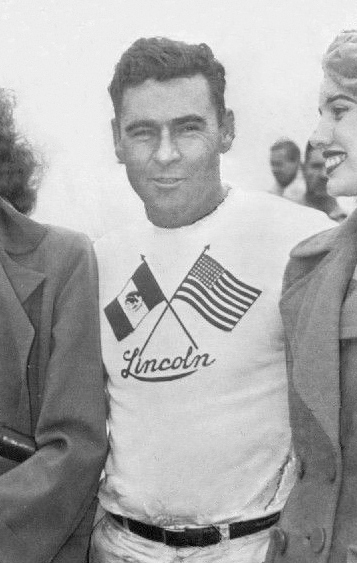
Signature numbers
- Win rate
- 0.0%
- Podium rate
- 0.0%
- Race starts
- 7
Era
About Chuck Stevenson
The Versatile Career of Chuck Stevenson
Charles Joseph Stevenson, born on October 15, 1919, in Sidney, Montana, carved out a notable career in American motorsport, distinguished by his versatility and success across multiple disciplines. Best known for clinching the prestigious AAA National Championship in 1952, Stevenson also demonstrated exceptional skill in endurance racing with two class victories in the grueling Carrera Panamericana, and proved his mettle in stock car competition by winning a NASCAR Grand National event. His journey from a rancher's son in Montana to a celebrated figure in racing concluded on August 21, 1995, in Benson, Arizona, leaving behind a legacy recognized by multiple hall of fame inductions.
Formative Years and Championship Car Ascent
Stevenson's family relocated to Fresno, California, during his early life. While the specifics of his initial forays into racing are not detailed, his professional career in the AAA and USAC Championship Car series began in 1949. This period marked his entry into top-tier open-wheel racing in the United States, a formative phase that would span several distinct periods: 1949–1954, 1960–1961, and 1963–1965. Across these seasons, Stevenson made a total of 54 starts in the Championship Car series, consistently demonstrating his capability by securing a top-ten finish on 37 occasions. This impressive consistency underscored his fundamental understanding of race craft and car management over a significant number of events. A notable aspect of Stevenson's career within this era was his participation in the iconic Indianapolis 500. He competed in this legendary event in 1951, 1952, 1953, 1954, 1960, 1961, 1963, 1964, and 1965. During the period from 1950 through 1960, the Indianapolis 500 held a unique status, being included in the FIA World Drivers' Championship. This meant that drivers competing at Indianapolis during these years were credited with World Drivers' Championship points and participation, alongside their pursuit of the AAA/USAC National Championship. Stevenson participated in five such World Drivers' Championship-counting races at Indianapolis. Despite his efforts, his best finish in these specific WDC-eligible events was a 12th place, and he did not accumulate any World Drivers' Championship points. This particular facet of his career highlights a brief, albeit indirect, connection to what would become Formula 1's premier championship.
The Apex of Performance: 1952 Championship and Endurance Triumphs
The year 1952 stands as the undisputed pinnacle of Chuck Stevenson's Championship Car career. It was during this season that he secured the coveted AAA National Championship, a testament to his sustained excellence and competitive edge. His championship campaign was bolstered by two significant victories within that same year, contributing decisively to his overall title. In total, Stevenson achieved four victories throughout his Championship Car tenure, with half of these pivotal wins occurring in his championship-winning season. Beyond the open-wheel circuits, Stevenson showcased remarkable versatility and endurance. His exploits in the Carrera Panamericana are particularly noteworthy. This grueling 2,000-mile (3,219 km) road race across Mexico was renowned as one of the most dangerous automobile races globally. In 1951, Stevenson played a crucial role, driving a Nash-Healey pace car, supplied by the Mexican Nash importer, to ensure the route was clear ahead of the competing racers. His true impact on this legendary event, however, came in 1952 and 1953. In both years, he achieved class victories in the sedan category, driving a "well-prepared" Lincoln Capri. This accomplishment is singular in the history of the Carrera Panamericana, as Stevenson remains the only driver to secure two class wins in the event. His success in such a demanding environment speaks volumes about his skill, resilience, and perhaps his ability to manage machinery effectively over long distances.
Stock Car Prowess and Career Statistics
Stevenson's racing portfolio extended significantly into stock car racing, further illustrating his adaptability across different vehicle types and racing formats. He was a frequent competitor in AAA and USAC Stock Car events, participating in no fewer than 40 races. In these contests, he consistently demonstrated strong performance, finishing in the top-five on at least 14 occasions. His stock car achievements also include a foray into NASCAR. Stevenson competed in two NASCAR events, and notably, he secured a victory at Willow Springs Raceway in 1956, driving a Ford. This win further cemented his reputation as a driver capable of winning in diverse racing environments. While the available records do not delve into specific technical strengths or a detailed analysis of his driving style, his consistent top-ten finishes in Championship Cars, his endurance victories in the Carrera Panamericana with a "well-prepared" vehicle, and his success in stock cars suggest a driver who was adaptable, mechanically sympathetic, and capable of extracting performance from various types of racing machinery. Information regarding specific team relationships is not provided in the available historical overview.
Legacy and Recognition
Chuck Stevenson's contributions to American motorsport have been formally recognized through his induction into multiple esteemed institutions. His achievements were first honored with his induction into the Fresno Athletic Hall of Fame in 1963, a testament to his local impact. Later, his broader influence on stock car racing was acknowledged with his induction into the West Coast Stock Car/Motorsports Hall of Fame in 2011. Furthermore, his career is celebrated within the National Midget Auto Racing Hall of Fame, indicating a diverse appreciation for his skills across different racing disciplines. These posthumous honors underscore the enduring respect and admiration for his career, which spanned several decades and left an indelible mark on the sport.