
 American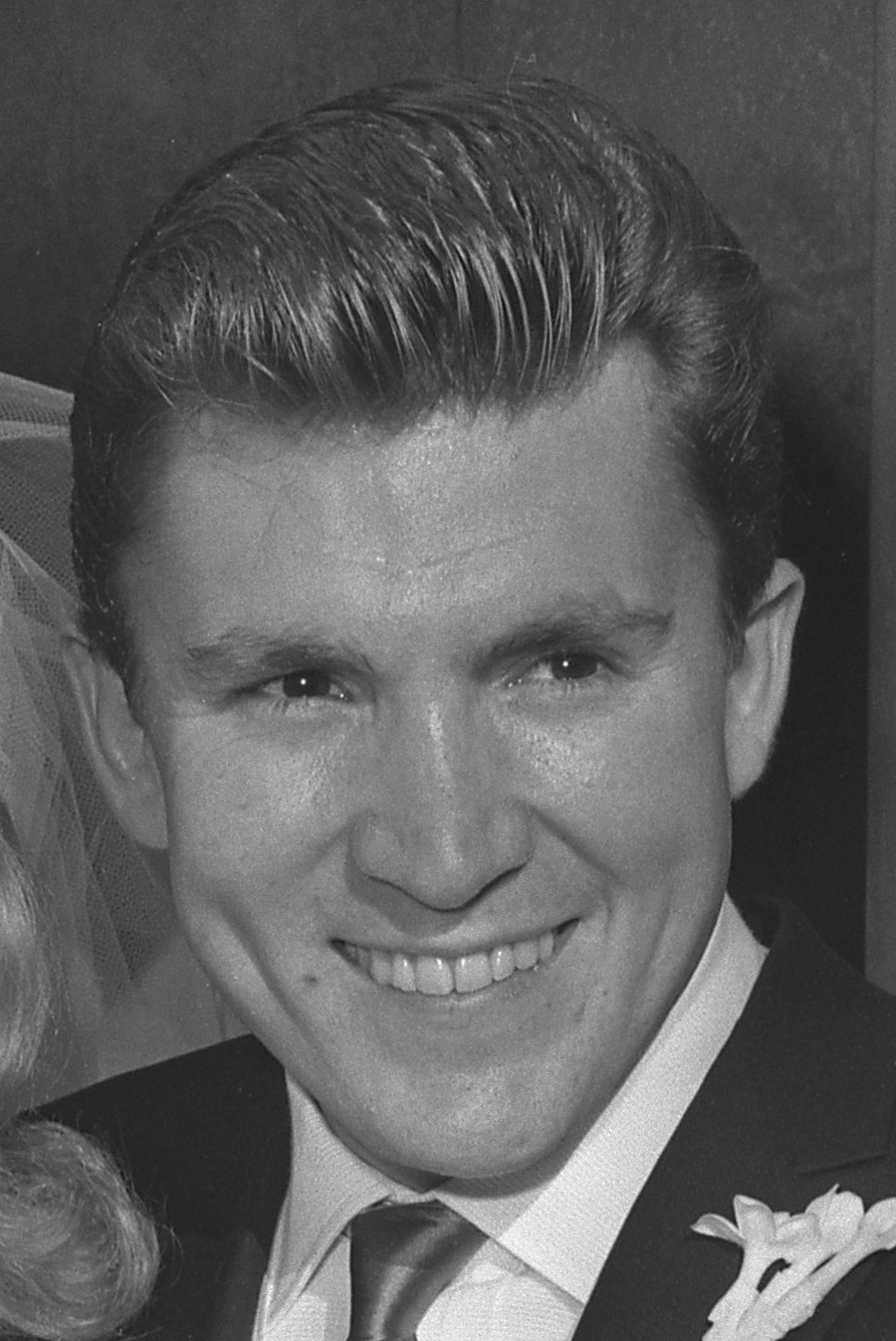
Signature numbers
- Win rate
- 0.0%
- Podium rate
- 0.0%
- Race starts
- 3
Era
About Lance Reventlow
Lance Reventlow, born Lance Graf von Haugwitz-Hardenberg-Reventlow on February 24, 1936, in London, was a figure of unique provenance in motorsport. An American entrepreneur and racing driver, he was also heir to the significant Woolworth fortune, the only child of heiress Barbara Hutton and Count Kurt von Haugwitz-Hardenberg-Reventlow. His early life was marked by a complex family dynamic, including stepfathers such as actor Cary Grant and Grand Prix winner Prince Igor Troubetzkoy, and a challenging childhood that saw him struggle with respiratory issues and asthma.
Early Career and Entry into Motorsport
Reventlow's introduction to the world of Grand Prix motor racing came early, at the age of 12 in 1948, through his mother's marriage to Prince Igor Troubetzkoy, who famously won the Targa Florio that same year. This exposure, coupled with the financial resources afforded by his inheritance, naturally steered him towards exotic automobiles and, subsequently, competitive motor racing. In his teenage years, while residing in Hollywood, Reventlow cultivated friendships within the burgeoning automotive enthusiast community, notably with James Dean. He actively participated in club events across California, honing his skills. A poignant moment in his early racing days occurred on September 30, 1955, when Reventlow and Bruce Kessler were among the last individuals to interact with James Dean. They met en route to an auto race in Salinas, California, with Reventlow recalling having coffee with Dean approximately thirty minutes before Dean's fatal accident near Cholame, California, while driving his Porsche 550 Spyder. Reventlow's professional racing career commenced in America in the mid-1950s. His initial competitive outings were in a Mercedes, before he transitioned to an 1100cc Cooper in 1956. The following year, he ventured to Europe to acquire a Maserati, which he subsequently crashed heavily at Snetterton, though he emerged unharmed. He also briefly piloted a Cooper Formula 2 car before returning to the United States, a move that would define a significant chapter of his motorsport involvement.
The Scarab Project and Sportscar Success
Upon his return to the U.S., Reventlow established his own company in Venice, California, with the ambitious goal of constructing bespoke Chevrolet-powered race cars. These vehicles, which he named Scarab, were developed under the technical leadership of chief engineer Phil Remington. The Scarab project was born from Reventlow's conviction that he could engineer a superior racing machine, even after considering purchasing a Lister Jaguar. Initially, the Scarab cars, driven by Reventlow himself and hired driver Chuck Daigh, achieved considerable success in sportscar racing. They frequently competed against formidable teams such as Cunningham's Lister Jaguars, often emerging victorious in major events. A notable triumph came in 1958 when Chuck Daigh drove a Scarab to victory at the Riverside International Grand Prix in California, overcoming an international field that included Phil Hill and the Ferrari Team. Further demonstrating the Scarab's capabilities, Carroll Shelby set a course record and secured first place at Continental Divide Raceways in Castle Rock, Colorado, behind the wheel of a Scarab. These early successes established the Scarab as a potent force in American sportscar racing.
Formula 1 Endeavor and Technical Challenges
The ambition of Reventlow's team extended to the pinnacle of motorsport: Formula One. The Scarab organization gained significant attention for its endeavor to build what was heralded as the first Formula One race car in America. To facilitate this, operations were shifted overseas to Britain. However, the transition to Formula One proved challenging. The Scarab F1 cars, designed with a conventional front-engine layout, struggled to compete effectively against the emerging generation of rear-engined race cars that were rapidly becoming the dominant technical paradigm in Grand Prix racing. Reventlow's personal Formula One World Championship record reflects these difficulties. He entered four Grand Prix events, all in 1960: the Monaco Grand Prix, the Dutch Grand Prix, the Belgian Grand Prix, and the British Grand Prix. Despite these entries, he did not start any of these races. At the 1960 British Grand Prix, he participated in practice sessions with a Cooper car, but the race itself was contested by Chuck Daigh. This period marked a significant technical hurdle for the Scarab team, as their innovative American approach clashed with the rapid evolution of European F1 design. Recognizing the technical imperative, Reventlow initiated a redesign, developing a competitive prototype Scarab with a rear-engine configuration. However, before the testing of this advanced prototype could be completed, Reventlow's interest in racing began to wane. By 1962, he made the decision to cease operations, shutting down the Scarab organization. The California facilities were subsequently leased to Carroll Shelby, and Reventlow withdrew from auto racing entirely.
Scarab Technical Legacy
Despite the abbreviated Formula One campaign, the Scarab project left a notable technical footprint. Reventlow's organization constructed a total of eight Scarab cars during its operational period. In a 1971 interview, Reventlow provided a detailed breakdown: three front-engined, Chevrolet-powered sports cars; three front-engined formula cars; one rear-engined formula car; and one rear-engined sports car. The front-engined formula cars showcased bespoke engineering, with two powered by engines specifically commissioned by Reventlow and designed by American racing engine designer Leo Goossen to Reventlow's precise specifications. The third front-engined formula car utilized a Goossen-designed and engineered Offenhauser engine. The pivotal rear-engined formula car featured a modified Buick powerplant. This specific engine, along with its suspension and brake package, was later adapted and utilized in the rear-engined sports car, which was the final Scarab vehicle constructed. This evolution from front- to rear-engined designs underscores the team's technical adaptability and pursuit of performance, even as the broader competitive landscape shifted.
Post-Racing Life and Legacy
After his departure from motorsport in 1962, Lance Reventlow pursued other interests. A notable personal decision occurred at age 21 when, given the choice of American, Danish, or British citizenship, he famously chose American, remarking, "I thought it over for a full 20 seconds." Reventlow's life concluded tragically on July 24, 1972. At the time, he was involved in real-estate development, seeking partners to establish a ski resort in Aspen, Colorado, where he maintained a residence. An experienced pilot himself, with thousands of hours and full IFR ratings for multi-engine aircraft, Reventlow was a passenger on a scouting flight for real estate locations. The single-engine Cessna 206 was piloted by an inexperienced 27-year-old student with only 39 hours of flying time. The pilot inadvertently flew into a blind canyon during a thunderstorm and stalled the aircraft while attempting a turn, leading to a fatal crash that claimed the lives of all four occupants. Reventlow's remains were initially buried but later exhumed and cremated, with his ashes interred in the Woolworth mausoleum at Woodlawn Cemetery in the Bronx. Lance Reventlow's legacy in motorsport is primarily defined by the ambitious Scarab project. Though his Formula One aspirations were short-lived and ultimately unsuccessful in terms of competitive results, the Scarab cars represented a pioneering American effort to challenge the European dominance in Grand Prix racing. His commitment to designing and building his own machines, rather than simply purchasing existing ones, marked him as an entrepreneur and innovator within the racing world, leaving behind a unique chapter in American motorsport history.