 British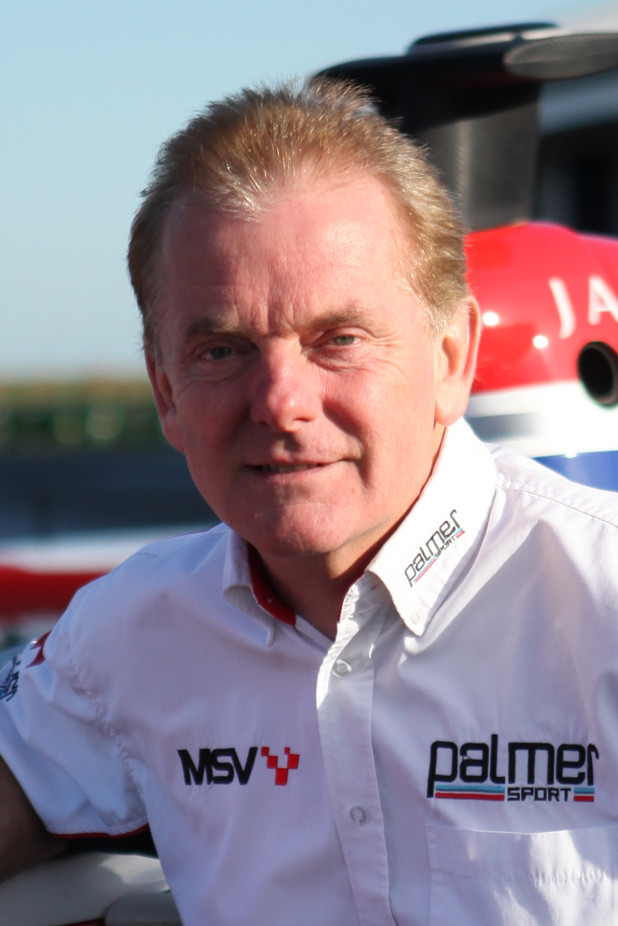
About Jonathan Palmer
Early Career and Medical Foundations
Jonathan Charles Palmer, born on November 7, 1956, in Lewisham, London, embarked on a multifaceted career that would see him transition from medicine to the pinnacle of motorsport. His early education at Brighton College was followed by medical studies at Guy's Hospital in London. During this period, Palmer began his racing endeavors, competing in club events with an Austin Healey Sprite and a Marcos. After completing his medical training, he worked as a junior physician at Cuckfield and Brighton hospitals, demonstrating a commitment to his initial professional path. However, the call of motorsport proved compelling. Palmer decided to pursue a professional driving career after gaining experience in Formula Ford from 1978 to 1980. His talent quickly became evident, culminating in a victory in the British Formula 3 Championship in 1981. This success led to a significant opportunity: a Formula One test drive with Williams in 1982. The following year, Palmer further solidified his reputation by winning the European Formula Two Championship, an achievement that earned him the prestigious British Racing Drivers' Club Gold Star award.
Formula One Debut and Formative Years
Palmer's association with Williams began as a test driver for the 1982 and 1983 seasons, a role he balanced concurrently with his European Formula Two campaign. His Formula One debut came on September 25, 1983, at Brands Hatch, driving a Williams in the European Grand Prix. This opportunity was extended as a gesture of appreciation from Frank Williams and Patrick Head, and Palmer finished 13th among 26 starters. For the 1984 season, Palmer moved to the Skoal Bandit RAM March team. Across six finishes, his best results included an eighth place, three ninth places, a tenth, and a 13th. The subsequent year, 1985, saw him join Zakspeed. While he started eight races, reliability proved a challenge, with retirements in all but the Detroit Grand Prix, where he finished 11th. The 1986 season, again with Zakspeed, brought 16 starts, but also eight retirements. His best finish that year was another eighth place in Detroit. Notably, at his home race at Brands Hatch in 1986, Palmer utilized his medical expertise as a qualified general practitioner to assist in the extrication of Ligier driver Jacques Laffite following a severe, career-ending crash on the opening lap.
Tyrrell Years and Key Achievements
In 1987, Palmer explored opportunities with top teams, engaging in discussions with McLaren team principal Ron Dennis regarding a potential role as the team's second driver alongside Alain Prost. Ultimately, Dennis signed Stefan Johansson, leading Palmer to join Tyrrell just a week before the season's opening race in Brazil. The Tyrrell car, powered by a naturally-aspirated Cosworth engine, was outpaced by its turbocharged rivals but proved to be reliable and agile on tighter circuits. This combination allowed Palmer to secure championship points in three races during the 1987 season. His career-best Formula One finish came in Australia, where he achieved a commendable fourth place. Furthermore, his performance in a naturally aspirated car earned him the Jim Clark Cup, a championship specifically for drivers competing with such machinery. Palmer continued with Tyrrell for the 1988 and 1989 seasons, where his notable results included two fifth-place finishes and three sixth-place finishes. At the close of the 1989 season, he transitioned to a test driver role for McLaren, marking a new chapter in his Formula One involvement.
Beyond Formula One: Sports Cars, Broadcasting, and Business Acumen
Palmer's racing career extended beyond Formula One. Between 1983 and 1990, he was a prominent figure in sports car racing, competing in the World Sportscar Championship with a Group C Porsche. A highlight of this period was his victory at the 1984 1000 km of Brands Hatch, shared with co-driver Jan Lammers. He also achieved a significant result at the prestigious 24 Hours of Le Mans, securing second place in 1985 with co-drivers James Weaver and Richard Lloyd, his best finish in five starts at the event. His versatility was further demonstrated by winning the Toyota Rallysprint at Brands Hatch in 1987 and finishing seventh in the British Touring Car Championship in 1991, driving a Prodrive BMW. Post-racing, Palmer transitioned into broadcasting, joining the BBC F1 commentary team as a pit lane reporter in 1991. Following the passing of James Hunt in 1993, Palmer moved into the commentary box alongside Murray Walker. After the BBC lost F1 broadcast rights in 1996, he joined the CBC for its annual coverage of the Canadian Grand Prix in 1997. Palmer also played a crucial role in the development of the McLaren F1 road car, driving one to a new production car speed record of 231 mph at the Nardo test track. His entrepreneurial spirit led to the establishment of PalmerSport in 1991, focusing on corporate hospitality motorsport events. This venture eventually led to the development of Bedford Autodrome, which opened in 1999 as a permanent home for PalmerSport, featuring four separate circuits totaling six miles of track. In 1998, he launched the Formula Palmer Audi Championship, aiming to provide a more cost-effective alternative to Formula 3. He notably managed the career of inaugural champion Justin Wilson, helping him secure a Formula One drive through an innovative share issue. In 2004, Palmer, alongside John Britten and Sir Peter Ogden, acquired the Brands Hatch, Oulton Park, Snetterton, and Cadwell Park circuits under the umbrella of MotorSport Vision (MSV). As Chief Executive, Palmer has overseen the revitalization of these circuits, implementing significant improvements, including a near-total redesign of Snetterton in 2011. MSV has expanded its portfolio, organizing the Formula Palmer Audi Championship, acquiring commercial rights for the British Superbike Championship, and operating the FIA Formula Two Championship from 2009 to 2012. The company now runs the GB3 and GB4 Championships, among other club series. MSV's growth continued with the acquisition of the freehold for the Bedford Autodrome site in 2009 and the opening of Bedford Aerodrome as a CAA licensed airfield in 2010. In 2015, MSV acquired a former military airbase in France for development into a major international motorsports complex. Further expansion included the acquisition of Donington Park in 2017, followed by multi-million-pound improvements. Most recently, in 2022, MSV secured the bid for Circuito de Navarra in Spain, initiating a program of enhancements to elevate its status as a premier motorsport venue.
Legacy and Family in Motorsport
Jonathan Palmer's influence extends to the next generation of racers. His son, Jolyon Palmer, became the 2014 GP2 Series champion and competed in Formula One for RenaultSport F1 Team during the 2016 and 2017 seasons, now serving as a commentator and columnist for BBC Sport F1. His younger son, Will Palmer, won the BRDC F4 Championship and the prestigious McLaren Autosport BRDC Award in 2015, also finishing second in the Renault Eurocup in 2017. Beyond motorsport, Palmer's family includes two daughters, Emily, an accountant, and Alice, a professional equestrian showjumper. Jonathan Palmer's career stands as a testament to a rare blend of medical discipline, racing prowess, and astute business leadership within the world of motorsport.