 American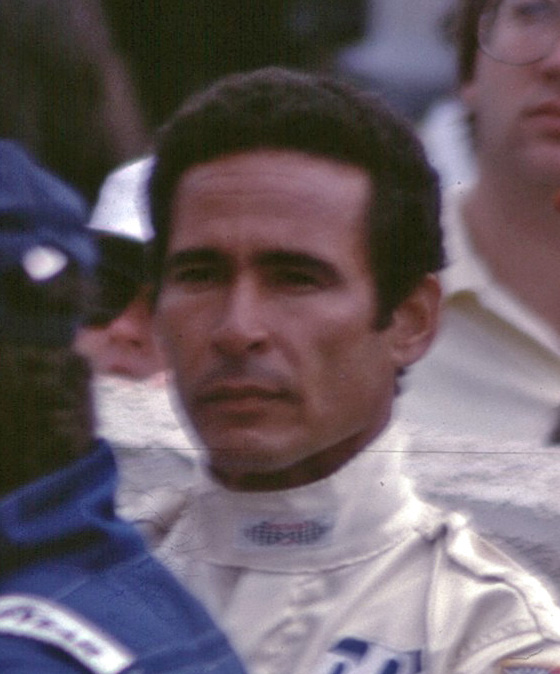
About Danny Ongais
Ezekiel "Danny" Ongais, born May 21, 1942, in Kahului, Hawaii, was a singular figure in American motorsport, known for his fearless approach and remarkable versatility. The only Hawaiian-born driver to compete in the Indianapolis 500, Ongais earned the monikers "On-the-Gas" and "The Flyin' Hawaiian" through a career spanning motorcycle racing, drag racing, sports cars, Indy cars, and Formula One. His unique achievement of winning both the NHRA U.S. Nationals and the 24 Hours of Daytona underscores his broad talent.
Early Career and Diverse Beginnings
Ongais's racing journey began early. At fourteen, he showed aptitude in motorbike racing, becoming the Hawaiian motorcycle champion in 1960 and a top-three expert through 1962. His youth included a stint as a US Army paratrooper in Europe in the late 1950s, before he returned to Hawaii for motor racing. The early 1960s saw Ongais transition to drag racing, quickly establishing himself. He secured consecutive American Hot Rod Association AA Gas Dragster Championships in 1963 and 1964, followed by the National Hot Rod Association AA Dragster championship in 1965. A notable moment was his victory over Don Prudhomme in the 1966 HHRA Nationals Top Fuel semifinals. By 1969, Ongais further cemented his reputation by winning both the NHRA Spring Nationals and the NHRA U.S. Nationals in the Funny Car class for Mickey Thompson.
Transition to Circuit Racing and Formula One Forays
The 1970s marked a significant shift for Ongais as he moved into circuit racing, climbing American motorsport ranks through SCCA road racing with crucial support from Ted Field. This progression led him through regional series and Formula 5000, culminating in his 1976 debut in USAC and Indy cars under Interscope Racing. His first Indy car race, the 1976 California 500, ended in a crash, a prelude to rapid ascent. In 1977, Ongais embarked on his first full Indy car season, quickly demonstrating pace with a victory at Michigan International Speedway, alongside three pole positions and a twelfth-place finish. That same year, he made his foray into Formula One with Interscope, piloting a year-old Penske PC4. While his U.S. Grand Prix appearance ended in a wet-track crash, he secured his best F1 result with a seventh-place finish in Canada. Ongais's most successful Indy car year came in 1978, a testament to his fast and daring driving style. He secured five victories across diverse tracks—three on large superspeedways (Ontario, Texas World, Michigan), one at the short Milwaukee Mile oval, and a road race at Mosport—showcasing exceptional versatility. He also claimed eight pole positions. At the 1978 Indianapolis 500, Ongais dominated early, leading 71 laps before a blown engine forced retirement while running second. Despite winning more Indy car races than any other driver that season, mechanical problems and lower finishes placed him eighth in the 1978 USAC Championship. The 1978 Michigan victory would ultimately be his final Indy car win. His final Formula One attempts in 1978 with Ensign and later a Shadow chassis proved less fruitful, plagued by brake problems and failures to qualify. Throughout this period, Ongais and Field continued their successful partnership in sports car racing, notably winning the 1979 24 Hours of Daytona with Hurley Haywood in their Interscope Porsche 935.
CART Career and Enduring Resilience
Ongais made his CART debut in the 1979 season with Interscope Racing, driving the Parnelli 6C-Cosworth DFX. He immediately showed pace, qualifying fourth and leading laps at Phoenix before engine problems intervened. At the Indianapolis 500, despite a practice crash, he qualified 27th and finished an impressive fourth. The aging Parnelli chassis presented challenges, but Ongais still secured another fourth-place finish and ended the year sixth in points. The 1980 season saw Interscope's attempt to introduce their own chassis disallowed, leading to continued use of the Parnelli. Ongais finished seventh at the Indianapolis 500 and achieved a third-place finish at Watkins Glen, concluding the season 15th in points. A defining moment occurred at the 1981 Indianapolis 500. After leading, a protracted 46-second pit stop put him back in traffic. Attempting a late pass, Ongais carried too much speed into Turn 3, leading to a severe, nearly head-on crash into the wall. The impact rendered him unconscious; officials cut him from the car. He sustained a concussion, compound leg fractures, a broken arm, and a six-inch diaphragm tear, necessitating a year-long recovery. Ongais's resilience was evident in his return for the 1982 Indianapolis 500, where he qualified ninth and led laps before another crash. He focused on sports cars for the remainder of that year. In 1983, he competed in the Indianapolis 500 and later filled in for an injured Johnny Rutherford at Patrick Racing for seven races, achieving a best finish of fifth. In 1984, Ongais took on the role of owner for Interscope Racing, fielding his own car. He secured a third-place finish at Michigan International Speedway and finished tenth in overall points. The 1985 season saw him survive a spectacular barrel roll at the Michigan 500 after contact with a slower car. His final significant Indy car attempt came in 1987, when Interscope Racing partnered with Team Penske for the Indianapolis 500. Ongais crashed in practice, suffering a concussion, which led to Al Unser Sr. taking over his car and famously winning his record-tying fourth Indy 500.
Later Career, Accolades, and Personal Reflection
After a nine-year absence from top-tier racing, Danny Ongais made a remarkable comeback at the 1996 Indianapolis 500. Called upon by John Menard to replace Scott Brayton, who had tragically died in a practice crash, Ongais, at 54, started last due to qualifying rules but drove to an impressive seventh-place finish. His final Indy Car race was in 1997, finishing thirteenth. A subsequent attempt to qualify for the 1998 Indianapolis 500 was thwarted by another concussion-inducing crash. Ongais's impactful career was formally recognized through several prestigious inductions. He was enshrined in the Motorsports Hall of Fame of America in 2000 and the Hawaii Sports Hall of Fame in 2001. The National Hot Rod Association also honored him by ranking him 39th on their list of Top 50 Drivers from 1951-2000. Beyond the track, Ongais was known for his intensely private and reclusive nature. He rarely granted interviews, revealing little about his personal life. Roger Penske observed, 'His whole heart is in racing, that's his life.' Jim Chapman of Interscope Racing remarked on the mystery surrounding Ongais, stating, 'Nobody really knew much about him,' though he later learned Ongais was married with a son. A minor historical discrepancy surrounded Ongais's birth year, officially listed as 1942, but with evidence suggesting it might have been 1938 or 1939. Danny Ongais, remembered by Mario Andretti as 'that quiet lion,' passed away on February 26, 2022, at 79, due to congestive heart failure. He was survived by his long-time partner, Patricia Soldano, his three children, and five grandchildren.