

 British
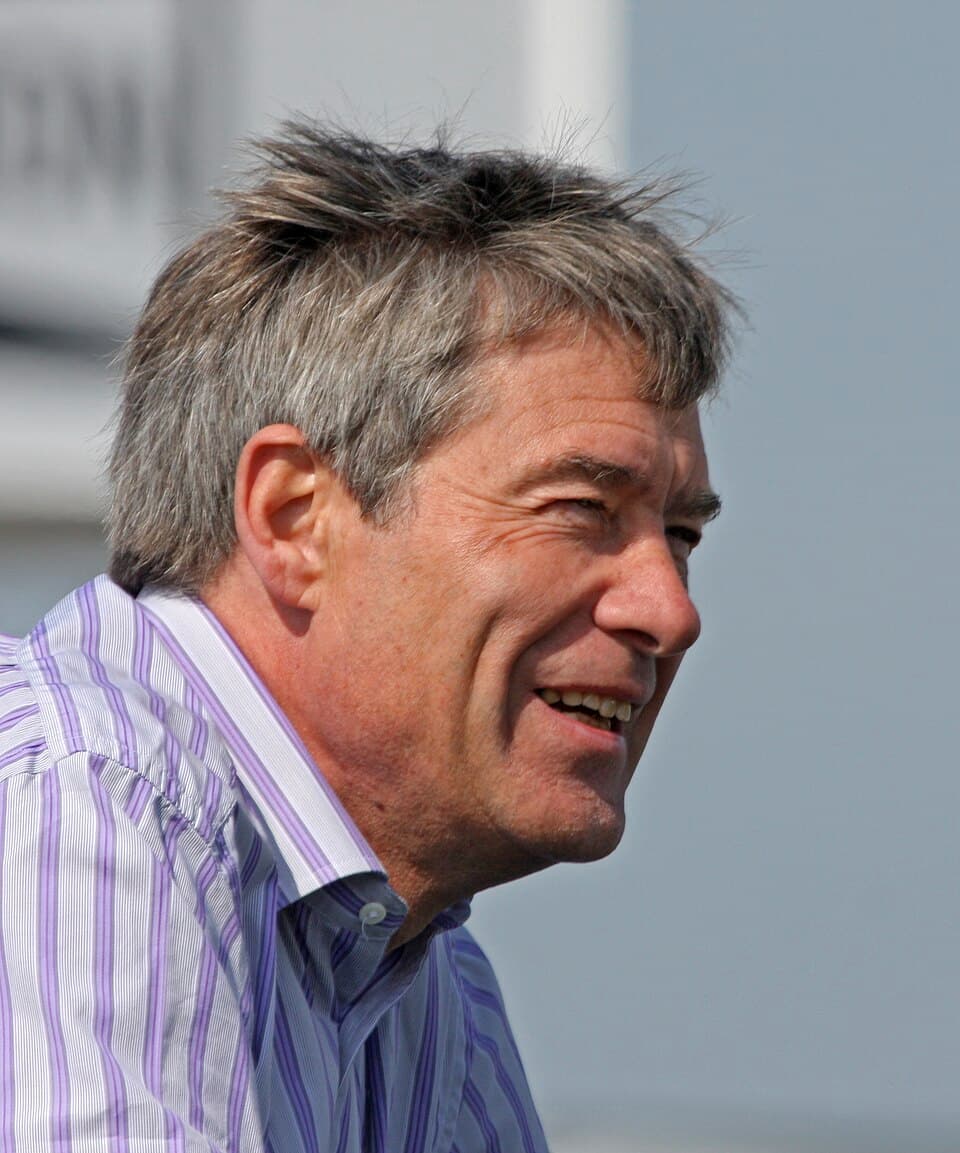
Signature numbers
- Win rate
- 0.0%
- Podium rate
- 0.0%
- Race starts
- 1
Era
About Tiff Needell
Early Career and Motorsport Foundations
Timothy Richard "Tiff" Needell, born on October 29, 1951, established a diverse career path that spanned both engineering and professional motorsport before becoming a prominent television personality. His foundational years saw him pursuing an Honours Degree in Civil Engineering from City University, London, leading to a role as a Structural Design Engineer with George Wimpey & Co. However, his early life also offered a glimpse into the world of racing, notably working as an auxiliary postman during Christmas in 1967, with one of his delivery routes including the residence of motorsport legend Bruce McLaren. Needell's competitive racing journey commenced in 1970 at a driving school held at Brands Hatch. He swiftly advanced into Formula Ford, a progression significantly aided by a fortuitous win in an Autosport magazine competition, which awarded him a Lotus 69 FF. Demonstrating a keen entrepreneurial spirit, he later sold this vehicle to fund the acquisition and racing of an Elden Mk10. His tenure in Formula Ford culminated in a championship victory in the Kent Messenger FF Championship, achieved with a Crosslé 25F after competing for only half of the season. This success paved the way for a partly paid drive in the Formula Ford 2000 Championship, where he showcased complete dominance in a Hawke chassis provided by McKinstry Racing, effectively launching him into Formula 3. Throughout the latter half of the 1970s, Needell consistently featured as a front-runner in both the British Formula 3 series and the Aurora British Formula One championship.
Formula 1 Aspirations and Grand Prix Debut
Needell's ambition to compete at the pinnacle of motorsport, the Formula 1 World Championship, faced an initial hurdle in 1979 due to a licensing issue that prevented his graduation. However, he returned to the F1 scene in 1980, securing a drive with Ensign for two Grands Prix. His debut came at the Belgian Grand Prix at Zolder, where he successfully qualified for the race. Unfortunately, an engine problem forced his retirement, preventing him from finishing. His subsequent attempt to qualify for the Monaco Grand Prix proved unsuccessful, marking a brief but notable foray into Formula 1.
Endurance Racing, Sports Cars, and Touring Car Endeavors
Following his Formula 1 experience, Needell diversified his racing portfolio, making significant appearances in endurance and sports car racing. His first participation in the prestigious 24 Hours of Le Mans was in 1981, driving an Ibec-Hesketh 308LM alongside Tony Trimmer, though they did not finish. A similar outcome occurred in 1982 with Bob Evans and Geoff Lees in an Aston Martin Nimrod NRA/C2. However, 1983 saw him complete the race, finishing 17th in a Porsche 956. In 1985, Needell briefly led the 24-hour classic in an Aston Martin EMKA C84/1 before ultimately finishing 11th. His most significant achievement at Le Mans came in 1990, where he secured a third-place overall finish, sharing the podium in a Porsche 962C with David Sears and Anthony Reid. Beyond endurance racing, Needell also competed in the British Rallycross Grand Prix in 1988 and 1989, driving a Metro 6R4. In his inaugural rallycross event in 1988, he finished fourth in the B-Final. He also spent several years in the British Touring Car Championship (BTCC) with Nissan. His return to sports car racing in 1995 included drives in a Porsche at Daytona and a Jaguar XJ220 at Le Mans. Needell then embarked on a five-year stint with the Lister Storm team. During this period, he notably reached third overall at Daytona in 1997 before gearbox issues relegated them to nineteenth. In 1998, he finished fifth in the British GT Championship and won the Silverstone Golden Jubilee Trophy race. The year 2000 proved particularly successful in the British GT Championship, as Needell won all three races he entered for Lister, including a victory at Donington Park in the main Lister entry and two subsequent wins at Circuit de Spa-Francorchamps and Silverstone Circuit in a privately entered CSi Lister, though these latter wins were not registered for championship points due to late entry. He also participated in one round of the 2000 FIA GT Championship at Zolder. His racing career since then has predominantly involved closed-wheel cars, with varying degrees of success in sports cars, historic racing, and touring cars. A notable incident occurred in 1993 when he was involved in an accident with Nigel Mansell at the TOCA shoot out race at Donington Park, which garnered particular notoriety.
Legacy and Post-Racing Career in Media
While Needell's racing career was extensive and varied, his public profile significantly expanded through his prolific work in television and media. He became a familiar face to motoring enthusiasts as a co-presenter of the original BBC TV series *Top Gear*, starting in 1987. Following the cancellation of *Top Gear* by the BBC in 2001, Needell, along with the entire cast, transitioned to Channel 5 to launch a new motoring show, *Fifth Gear*, which he co-presented for many years. He also co-presented 'MPH' at Earls Court on multiple occasions with Jeremy Clarkson, Richard Hammond, and James May. Needell's connection to *Top Gear* continued, with a brief appearance in a 2005 Comic Relief special and a more significant return in 2011, driving the Ariel Atom V8 in a segment. His racing expertise also led to speculation that he was the elusive masked driver, The Stig, on the revived *Top Gear*. Although Ben Collins was later revealed as The Stig, Needell made a notable return to the show after a nine-year absence to train director Danny Boyle for the