

 British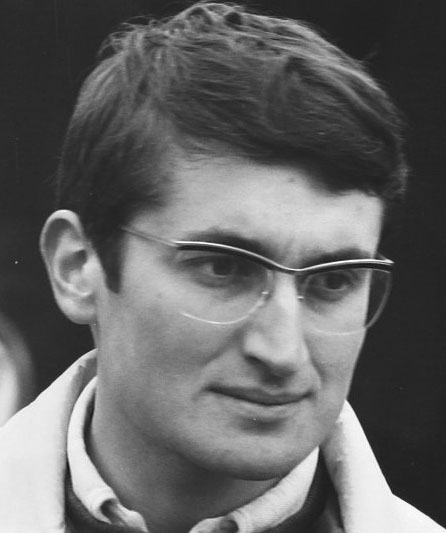
Signature numbers
- Win rate
- 0.0%
- Podium rate
- 0.0%
- Race starts
- 13
- Total points
- 2
Era
About John Miles
Introduction
John Jeremy Miles (1943–2018) was a British racing driver whose Formula One career was closely intertwined with the innovative, often challenging designs of Team Lotus during a transformative era of the sport. Participating in 15 Formula One World Championship Grands Prix, Miles debuted on July 6, 1969, as the official Team Lotus test driver. He scored a total of two championship points, achieving a fifth-place finish at the 1970 South African Grand Prix. His tenure at Lotus was defined by his involvement in developing groundbreaking, yet sometimes problematic, machinery, offering a unique perspective on the demanding world of Formula One.
Early Career
Miles began his serious racing career in 1963/64, quickly establishing himself. Driving a front-engined Diva GT, he secured the overall championship in the Redex Sports Car Championship. A second successful season with the Diva followed, supported by John Willment. His talent further shone in 1966, winning the Autosport Championship in a Willment-sponsored Lotus Elan 26R, achieving an impressive 15 outright wins from 17 races. This Elan 26R remained unbeaten until the advent of mid-engined competitors like the Chevron. In late 1966, at Boxing Day Brands, Miles debuted the new Lotus 47GT. Over 1967 and 1968, he raced for the works team in F3 Lotus 41, 41X, and GT 47, securing four international F3 victories in 1968.
Formula One Debut and Formative Years
Miles's 1969 entry into Formula One placed him at the forefront of technical development for Team Lotus. His primary role was to develop the unconventional Lotus 63, a four-wheel-drive (4WD) F1 car. This design faced skepticism, with World Champion Graham Hill and Jochen Rindt reportedly refusing to drive it, deeming it a "death trap." Miles, however, took on the challenge. In his five Grand Prix appearances with the 63, he managed only one finish, securing tenth place. The car's inherent difficulties were evident as Mario Andretti, given the car twice, also failed to finish. Despite its general struggles, the Lotus 63 showed potential on specific circuits; Miles qualified mid-grid for the Canadian Grand Prix at Mosport, where the track's fast, sweeping bends suited the 4WD concept, contrasting its "disaster" performance on twisty tracks. The 1970 season saw Miles promoted to the number two driver role at Lotus, partnering Jochen Rindt, following Graham Hill's leg injuries. His season began promisingly at the South African Grand Prix, where he finished fifth in a Lotus 49, securing his only two championship points. This achievement came despite driving most of the race with petrol leaking over him, a situation that, according to the account, still led to Colin Chapman expressing dissatisfaction that Miles had not overtaken Jean-Pierre Beltoise for fourth. The subsequent races introduced the new Lotus 72, a revolutionary but initially problematic design. At the Spanish Grand Prix, Miles failed to qualify, while Rindt retired early. Persistent issues with the 72 led Lotus to revert to the updated Lotus 49C for Monaco. Miles practiced in the 72 but failed to qualify in the 49C. Graham Hill, though slower in practice, was allocated Miles's 49C due to his guaranteed grid place as a former World Champion. In Belgium, Miles raced the 72, while Rindt opted for the older 49C; both retired. The Lotus 72's potential began to emerge at Zandvoort. Rindt qualified on pole and won. Miles, however, raced a more experimental and challenging version of the 72, which retained many of Chapman's anti-squat and anti-dive roadholding features. While this configuration provided excellent brakes, it made the car a handful to drive. Miles qualified and finished seventh. His start was exceptional, jumping into fifth and holding his own against experienced drivers. A missed gear on lap six allowed Regazzoni to pass, and Piers Courage overtook on lap twelve. Miles then engaged in an intense midfield duel, fending off Jean-Pierre Beltoise and John Surtees. Rindt, in his dominant drive, required considerable skill to lap this trio. Beltoise finally passed Miles on lap 49, followed by Surtees, though Miles immediately retook the position. Surtees ultimately secured sixth place only four laps from the flag, by which point the 72's brakes on Miles's car were effectively gone. In France, Rindt secured another victory, while Miles finished outside the points, albeit on the same lap as his team leader.
Team Dynamics and Challenges
By mid-1970, the disparity between Miles and Jochen Rindt became increasingly apparent. Rindt won five races and secured the World Championship, thoroughly overshadowing Miles. Miles himself noted that Colin Chapman regarded him "as a sort of grease monkey" and paid him a modest £300 per race, from which he had to cover his own travel expenses, occasionally supplemented by funds from Chapman for his return to England. The British Grand Prix marked a significant shift with the introduction of a third Lotus car for Emerson Fittipaldi. Fittipaldi, driving a reliable 49C, finished his first three Grands Prix, while Miles faced retirements in both the British and German races. These were attributed to a hairline fracture in the water pipes of his Lotus 72, leading to overheating. The lack of attention to Miles's car, compared to the "seriously prepared" older Lotus given to Fittipaldi, suggested Chapman's growing focus on the young Brazilian. Miles's car also suffered three Cosworth V8 engine failures during practice due to the undiagnosed fracture. At Brands Hatch, Miles qualified seventh, 1.2 seconds slower than Rindt, who took pole and won. At Hockenheim, Miles qualified tenth and battled with Surtees and Denny Hulme before his engine failed. During Hockenheim practice, Miles notably provided a slipstream tow to assist Fittipaldi in qualifying. Rindt, commenting on the 72's effectiveness, stated "a monkey could have won in the car" and expressed mystification that Miles, who qualified two seconds behind him, wasn't driving faster, as two seconds slower was no safer. Challenges continued at the Austrian Grand Prix, a new, high-speed circuit. Miles qualified on the fifth row but experienced a critical failure on the fourth lap: "my left front brake shaft broke," leaving him without braking.
The Monza Tragedy and Departure
The culmination of Miles's challenging tenure at Lotus arrived at the Italian Grand Prix at Monza. Chapman instructed both Miles and Rindt to race the new Lotus 72 without front and rear wings, a configuration designed to maximize speed on Monza's long straights. Miles reluctantly complied, expressing concerns about the wingless 72's handling. Tragically, during the race, Jochen Rindt was killed when a brake shaft on his new Type 72 failed. His car veered off track and impacted a steel barrier, positioned too high for the 72's wedge design. Rindt, who had recently agreed to wear a simple lap belt, slid underneath it, and the belt buckle caused a fatal throat injury. The profound impact of Rindt's death, coupled with relentless pressure and technical difficulties, proved too much for Miles. He was widely considered "too cerebral and sensitive" to fully align with Chapman's demanding vision, and he subsequently left the team. In the immediate aftermath, Team Lotus withdrew from the Canadian Grand Prix. At the next race at Watkins Glen, Reine Wisell drove the second Lotus car, while Emerson Fittipaldi secured a victory that ultimately clinched both the Drivers' and Constructors' Championships for Lotus.
Post-Formula One Career and Legacy
Following his departure from Team Lotus, Miles was signed by BRM for the 1971 season, primarily serving as a test driver. He participated in two non-championship Formula One rounds at Brands Hatch and Hockenheim in the BRM. That same year, he achieved significant success in sports car racing, winning the British sports car championship in the 2-litre class. Driving a Chevron B19, he triumphed over a competitive field including Chris Craft and Wilson Fittipaldi. Beyond racing, John Miles, a qualified mechanical engineer, contributed to the automotive industry. He worked for Lotus's road car division, applying his technical expertise. He also shared his road impressions of sportier cars through a column titled "Miles Behind The Wheel" for Autocar magazine. In his personal life, John Miles was the son of actors Bernard Miles and Josephine Wilson. He passed away on April 8, 2018, due to complications following a stroke. His interests extended to music; in 1985, he co-founded 'Miles Music,' a jazz recording company. In 1996, their release, the CD "Tamburello" by Peter King, was awarded the BT Jazz CD of the year, a work notably inspired by the death of Ayrton Senna.