
 Italian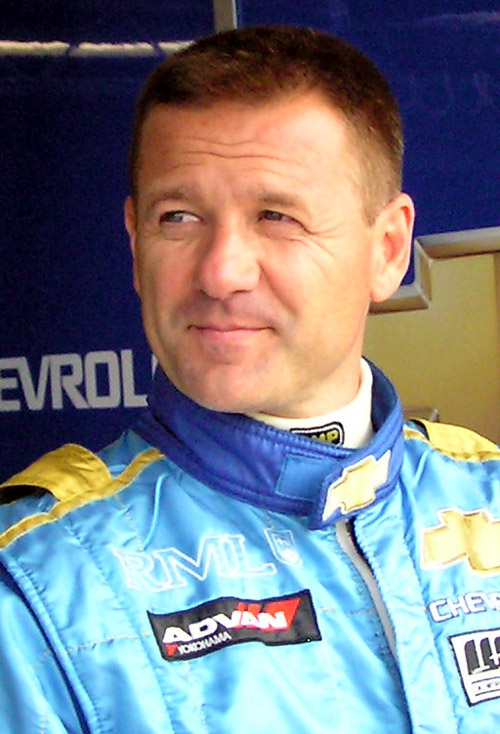
About Nicola Larini
Introduction
Nicola Giuseppe Larini, born on March 19, 1964, emerged as a prominent Italian racing driver whose career spanned Formula One from 1987 to 1997, alongside significant success in touring car racing. While his Formula One journey saw him participate in 75 Grands Prix and achieve a notable podium finish, it was in touring cars, particularly with Alfa Romeo, that Larini truly cemented his reputation, securing the Deutsche Tourenwagen Meisterschaft in 1993 and the Italian Superturismo Championship in 1992.
Early Career
Larini’s motorsport trajectory began in 1983 with Formula Italia, quickly demonstrating his potential. By 1984, he had progressed to Formula Abarth, where he finished third overall, concurrently making his debut in Italian Formula Three. His talent culminated in 1986 when he clinched the Italian Formula Three title driving for Coloni in a Dallara chassis. This success briefly led to a stint in Formula 3000 with the same Coloni team in 1987, marking his rapid ascent through the junior categories.
Formula One Debut and Formative Years
Larini’s swift progression brought him to Formula One in 1987, making his debut with Coloni for the final two European rounds. While he failed to qualify for his home Italian Grand Prix, he successfully entered the Spanish Grand Prix, though his race concluded prematurely. The 1988 season saw Larini join the Osella Formula One team, where he garnered considerable attention for his valiant performances in a car widely regarded as uncompetitive. Despite the machinery’s limitations, he achieved a best result of ninth place at the Monaco Grand Prix, showcasing his ability to extract performance. He continued with Osella in 1989, a season where the team’s improved car was frequently hampered by the demanding pre-qualifying sessions. Nevertheless, Larini consistently shone, notably running in sixth position at the San Marino Grand Prix before a hub failure forced his retirement, and holding third place at the Canadian Grand Prix until an electrical issue ended his challenge. His qualifying prowess was also evident with a tenth-place grid slot at the Japanese Grand Prix. A move up the grid occurred in 1990 as Larini joined the Ligier team. However, despite being well-funded, the French outfit was experiencing a period of creative stagnation, and their car proved to be a distinct midfielder. Larini’s best results were a pair of seventh-place finishes in what was a low-key year for the team, though he demonstrably outshone his teammate, Philippe Alliot. The 1991 season saw Larini move to the new Modena team, once again facing the challenge of pre-qualifying. He successfully navigated this hurdle in the opening round, the United States Grand Prix, where he secured a seventh-place finish. Unfortunately, the team soon encountered severe financial difficulties, preventing further development and limiting Larini to qualifying for only four additional races that season. For the 1992 season, a full-time Formula One drive eluded Larini. Instead, he was signed by Ferrari to contribute to the development of their active suspension system, a testament to his technical understanding and driving feedback. During this period, he maintained his competitive edge by winning the Italian Touring Car Championship with Alfa Romeo. His strong performances led to a call-up to the Ferrari Formula One team at the end of the year, replacing Ivan Capelli to race-test the active suspension car in Grand Prix conditions. Despite starting both races from the back of the grid due to technical reasons, he made a fair impression.
Peak Years and Signature Drives
The year 1993 saw Larini continue his Ferrari testing duties while simultaneously achieving significant success in touring car racing, capturing the Deutsche Tourenwagen Meisterschaft (DTM) title in Germany with Alfa Romeo. His opportunity for a more substantial return to Formula One with Ferrari arrived in 1994, when he was called upon to replace the injured Jean Alesi early in the season. At the Pacific Grand Prix, he qualified an impressive seventh, though his race ended prematurely in a first-corner incident involving Mika Häkkinen and Ayrton Senna. His most notable Formula One achievement came at the subsequent San Marino Grand Prix, where he secured a second-place finish. This represented his first points score in Formula One, a significant milestone, yet it was tragically overshadowed by the fatal accidents of Roland Ratzenberger and Ayrton Senna during the same weekend. Following this, Larini returned to touring car commitments with Alfa Romeo for the remainder of the year, finishing third in the German series.
Technical Aptitude and Driving Style
Throughout his career, Larini consistently demonstrated a remarkable ability to perform beyond the perceived capabilities of his machinery. His "valiant performances" in the uncompetitive Osella cars, where he managed to run in points-scoring positions despite significant technical disadvantages, underscore a driving style characterized by determination and an acute understanding of car limits. His capacity to "easily outshine" teammates, even in struggling outfits like Ligier, further highlights his inherent speed and adaptability. Furthermore, his engagement with Ferrari for the development of their active suspension system points to a driver with a strong technical sensibility, capable of providing precise feedback essential for advanced engineering projects. This combination of raw speed, resilience, and technical insight defined his approach to racing.
Team Relationships and F1 Career Conclusion
Larini’s Formula One career saw him compete for several teams, including Coloni, Osella, Ligier, and Modena, often in challenging circumstances. His relationship with Ferrari was particularly significant, moving from a development driver role to a substitute race driver. His final full-time F1 opportunity came in 1997 with Sauber, a team utilizing rebranded Ferrari engines. He scored a point in his return at the Australian Grand Prix, but his tenure was brief, concluding after five races due to a series of disagreements with team principal Peter Sauber. This marked the end of his consistent involvement in Formula One.
Championships and Key Statistics
Nicola Larini participated in 75 Formula One Grands Prix. His most significant F1 result was a second-place finish at the 1994 San Marino Grand Prix, which was one of only two points-scoring finishes in his Formula One career, the other being a single point scored at the 1997 Australian Grand Prix. Beyond Formula One, Larini achieved considerable success in touring car racing, securing multiple championships: * 1986 – Italian Formula 3 Champion * 1992 – Italian Superturismo Champion (with Alfa Romeo) * 1993 – Deutsche Tourenwagen Meisterschaft (DTM) Champion (with Alfa Romeo) He also achieved a sixth-place finish in the German series in 1995 and an eleventh-place finish in the ITC in 1996.
Legacy and Post-Formula One Career
Larini’s legacy is predominantly defined by his extensive and highly successful career in touring car racing, where he became a stalwart for Alfa Romeo for many years in the European Touring Car Championship. Following his time with Alfa, he continued his touring car endeavors with Chevrolet in the World Touring Car Championship (WTCC) between 2005 and 2009. On November 21, 2009, Larini announced his retirement from professional racing, though he clarified that he would not cease racing entirely. This commitment to the sport was evident in his later appearances, such as winning Race 1 at Imola in the European Lotus Cup in 2016, and making his NASCAR Whelen Euro Series debut in 2017 at Autodromo di Franciacorta, driving for Alex Caffi Motorsport. His career stands as a testament to versatility and enduring passion for competition across various disciplines.