 French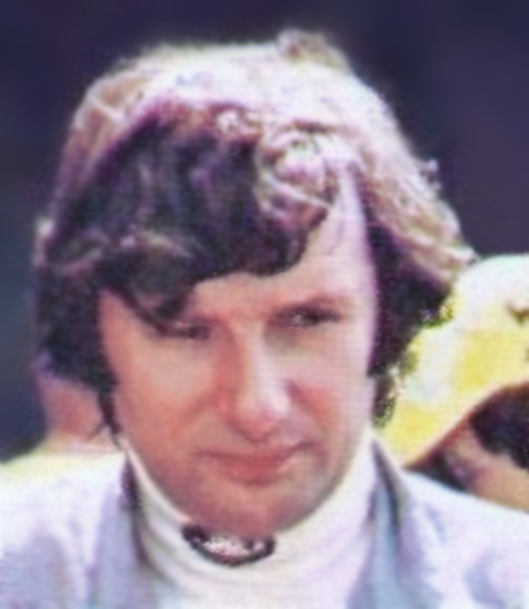
About Jean-Pierre Jarier
Early Career Foundations
Jean-Pierre Jacques Jarier, born on July 10, 1946, in Charenton-le-Pont, near Paris, embarked on a racing career that would see him compete at the pinnacle of motorsport for over a decade. His formative years in racing began in Formula France before progressing to French Formula Three, where he secured a commendable third place overall in 1970. The following year, Jarier moved into the European Formula Two series with the Shell Arnold team, achieving two third-place finishes. It was during this period, in 1971, that he made his initial Grand Prix appearance at Monza, driving a March Engineering 701 rented by his F2 outfit. However, financial constraints led to his departure from the team midway through 1972. Jarier's talent was undeniable, and for the 1973 season, he secured a dual role with March Engineering, competing in both Formula Two and Formula One. While his Formula One campaign in the uncompetitive March 721G proved challenging, Jarier showcased his prowess in Formula Two, dominating the championship with an impressive eight victories to claim the title. This strong performance in the 1973 F2 European series brought him close to a Ferrari Formula One seat, though the opportunity ultimately eluded him as Clay Regazzoni reportedly insisted on Niki Lauda as his teammate.
Formula One Debut and Formative Years
The 1974 season marked Jarier's full-time entry into Formula One with Shadow Racing Cars. Following the tragic death of Peter Revson, Jarier assumed the role of team leader, demonstrating his capability by securing a third-place finish at the Monaco Grand Prix and concluding the season 14th overall in the championship standings. Beyond Formula One, 1974 also saw Jarier excel in sports car racing, where he played a pivotal role in Matra's successful defense of its world sports car title. His exceptional speed on classic road circuits was evident, as he proved faster than Jacky Ickx at both the Nürburgring and the old Spa road circuit, adding three victories at Brands Hatch, Watkins Glen, and Paul Ricard to his impressive year. The 1975 season began with promising displays of raw speed. Jarier put his Shadow DN5 on pole position for the Argentine Grand Prix, only for a critical component failure during the warm-up to prevent him from taking the start. He repeated the feat at the Brazilian Grand Prix, dominating the early stages of the race before a fuel metering unit failure forced his retirement. This season became a testament to the frustrating combination of bad luck and poor reliability that plagued his efforts, compounded by a decline in the Shadow team's overall pace. His sole points-scoring finish that year was a fourth place in the shortened Spanish Grand Prix. The 1976 season, also with Shadow, saw Jarier qualify third in an updated DN5B and set the fastest lap at the opening Brazilian Grand Prix. While running second, just seconds behind Niki Lauda, he spun and crashed on oil left by James Hunt, ending his race. Subsequently, the car's competitiveness waned, and Jarier failed to score any points.
Navigating the Grid: Team Changes and Standout Moments
Jarier's career trajectory saw him move to the ATS team in 1977, driving a Penske chassis. He immediately scored a point in his debut race for the team. Later that year, he undertook one-off drives for Shadow and Équipe Ligier when ATS opted to skip the final races. His versatility was again highlighted in sports cars, where he won two races in an Alfa Romeo T33 alongside Arturo Merzario and secured a second-place finish at the Le Mans 24 Hours with Vern Schuppan in a Mirage. The 1978 season with ATS, utilizing their in-house HS1 chassis, proved less successful. An argument with team principal Günter Schmid after failing to qualify for the Monaco Grand Prix led to Jarier's dismissal. Although briefly rehired for the German Grand Prix, he again missed the grid and subsequently departed the team following another disagreement with Schmid. However, the latter part of 1978 presented a significant opportunity when Team Lotus signed him to fill the seat left vacant by the tragic death of Ronnie Peterson. Jarier delivered immediate impact, setting the fastest lap at the United States Grand Prix East at Watkins Glen, where he was running third before running out of fuel. He then secured pole position and dominated the Canadian Grand Prix in Montreal, only for an oil leak to prematurely end his race. These impressive late-season showings underscored his potential and led to a contract with Tyrrell Racing. Over two seasons with Tyrrell, Jarier consistently scored points, achieving his best results with two third-place finishes at the 1979 South African Grand Prix and the 1979 British Grand Prix. The 1981 season began with a temporary stint for Ligier, covering for the injured Jean-Pierre Jabouille for two races at Long Beach and Rio de Janeiro, before he joined Osella midway through the year.
Later Career and Driving Style
The 1982 season saw Jarier complete a full campaign with Osella. He delivered the team's best-ever finish by securing fourth place at the San Marino Grand Prix, a race notably affected by a boycott from the majority of British teams. Despite the challenges faced by the team throughout the rest of the year, Jarier played a crucial role in maintaining morale following the tragic death of Riccardo Paletti at the Canadian Grand Prix. His final full season in Formula One came in 1983 with Equipe Ligier. An early promising run at Long Beach was cut short by a collision with Keke Rosberg, and he ultimately finished the season without points. This period also highlighted a controversial aspect of his driving style: his blocking tactics as a backmarker, which frequently angered other drivers. A notable instance occurred at the Austrian Grand Prix, where Jarier held up Ferrari driver Patrick Tambay for two corners. This obstruction allowed Tambay's teammate René Arnoux and Brabham driver Nelson Piquet to pass, costing Tambay the lead he had held from the start. A visibly furious Tambay gestured at Jarier upon finally clearing him.
Post-Formula One and Legacy
Following the 1983 season, Jean-Pierre Jarier retired from active motorsport. However, he was enticed back to competition in 1994 to participate in the Porsche Supercup. This return led to several successful sports car ventures, culminating in him winning the French GT Championships in both 1998 and 1999. Beyond the racetrack, Jarier also contributed his driving expertise to the film industry, performing major stunt work for the John Frankenheimer-directed movie "Ronin," a director known for his earlier work on the 1966 Grand Prix film. Jarier's career was characterized by flashes of exceptional speed and moments of brilliance, often battling against uncompetitive machinery or unfortunate reliability issues, leaving a mark as a driver capable of strong performances when circumstances aligned.