

 British
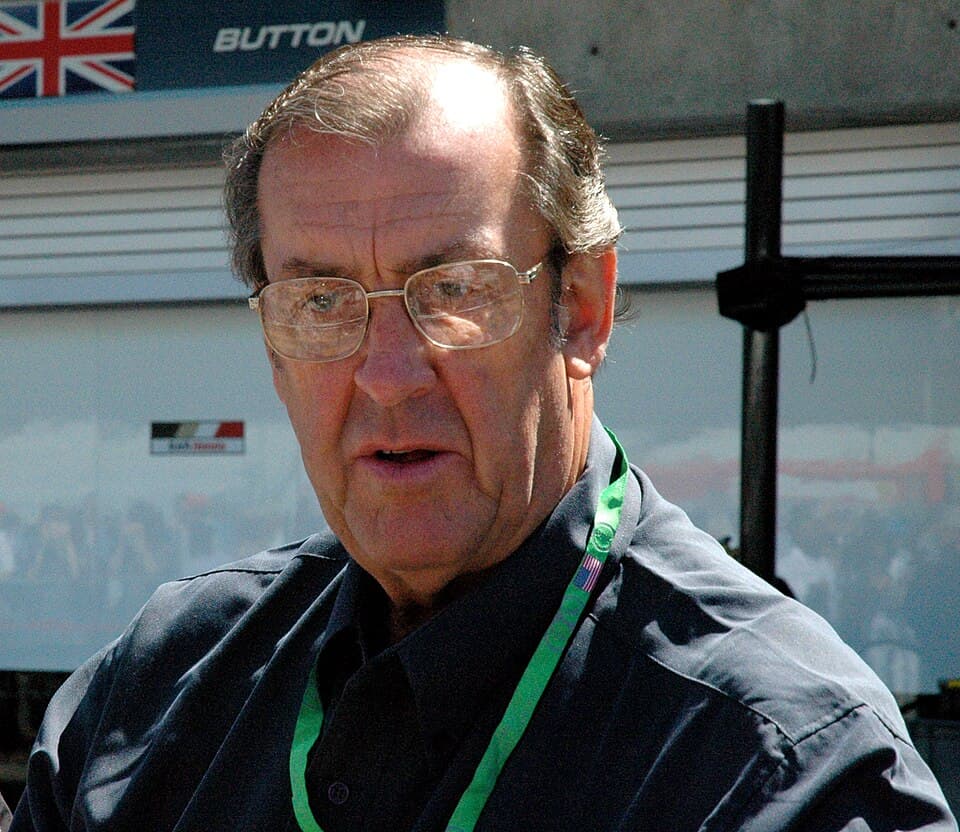
About David Hobbs
Early Career and Diverse Racing Path
David Wishart Hobbs, born on June 9, 1939, in Royal Leamington Spa, England, just months before the onset of World War II, embarked on a remarkable and enduring career in motorsport. His formative years were influenced by a family legacy of innovation; his father, Howard Frederick Hobbs, an Australian engineer, was the inventor of an early automatic transmission known as the Mecha-Matic. This pioneering technology even found its way into Colin Chapman's Lotus Elite racecars, hinting at an early connection to high-performance automotive engineering. Hobbs's driving career was characterized by its extraordinary breadth and longevity, spanning three decades across virtually every major discipline of international motor racing. From the mid-1960s through the mid-1990s, he competed at the highest levels in sports cars, touring cars, Indy cars, IMSA, Can-Am, and even Formula One. This versatility saw him participate in iconic events such as the Indianapolis 500 and the 24 Hours of Daytona, showcasing his adaptability and skill across vastly different machinery and racing formats. His commitment to endurance racing was particularly evident at the 24 Hours of Le Mans, where he made an impressive twenty starts. His debut at Le Mans in 1962 saw him finish a commendable eighth, and over his career, he secured a pole position and achieved a best finish of third place on two separate occasions, in 1969 and again in 1984, underscoring his consistent performance at one of the world's most demanding races.
Formula 1 Aspirations and Championship Recognition
While Hobbs's career touched upon Formula One, his anticipated Grand Prix debut was met with an unfortunate setback. He was slated to make his F1 debut for Tim Parnell Racing at the 1965 French Grand Prix held at Clermont-Ferrand. However, a serious road accident prior to the event resulted in a three-week hospitalization, preventing him from taking his place on the grid and delaying his full immersion into the pinnacle of motorsport. Despite this early challenge, Hobbs's talent was widely recognized within the racing community. In 1969, his achievements earned him a prestigious inclusion in the FIA list of graded drivers. This exclusive group comprised just 27 individuals globally, designated by the sport's governing body as the best drivers in the world based on their proven capabilities and results. This recognition solidified his status as an elite competitor on the international stage, even as his primary focus remained on diverse racing categories.
Peak Performance and Championship Success
The early 1970s marked a period of significant championship success for David Hobbs. In 1971, he delivered a dominant performance in the L&M 5000 Continental Championship, driving a McLaren M10B-Chevrolet for Carl Hogan's St. Louis-based team. His campaign was exceptional, securing victory in five of the eight rounds contested that year. These commanding wins came at renowned circuits such as Laguna Seca, Seattle, Road America, Edmonton, and Lime Rock, demonstrating his mastery across a variety of track layouts and conditions. This championship title was a testament to his speed and consistency in a highly competitive open-wheel series. Over a decade later, Hobbs continued to demonstrate his enduring skill and competitive drive by claiming the 1983 Trans-Am Series championship. This triumph further highlighted his versatility, adapting successfully to the demands of production-based sports car racing and proving his ability to win championships across different eras and vehicle types. His broad racing portfolio also included two starts in the NASCAR Winston Cup series in 1976, where he notably led two laps at the prestigious Daytona 500. Additionally, he participated in a race during the 1979 International Race of Champions (IROC), further cementing his reputation as a driver capable of competing effectively against the world's best in various forms of motorsport.
Post-Racing Career: A Voice of Motorsport
Following an illustrious career behind the wheel, David Hobbs transitioned seamlessly into a prominent role as a motorsport commentator, becoming one of the most recognizable voices in racing for several decades. His commentary career began in the mid-1970s with CBS, where he contributed until 1996. He then moved to Speed, providing his insights from 1996 to 2012, before joining NBC from 2013 to 2017. Throughout his extensive broadcasting tenure, Hobbs covered a wide array of racing disciplines. He was a familiar voice for Formula One and GP2 races, often alongside Bob Varsha and former Benetton mechanic Steve Matchett, offering expert analysis to a global audience. His commentary extended to events suchs as the SCCA Valvoline runoffs and various segments of the 24 Hours of Daytona. For CBS, he was an integral part of their Daytona 500 coverage, serving in dual capacities as both a colour commentator and a feature/pit reporter from 1979 until 1996. His expertise was also sought by ESPN, where he served as an analyst for their Formula 1 coverage from 1988 until 1992, working alongside respected figures like Chris Economaki, John Bisignano, and Bob Varsha. His ability to articulate the nuances of racing, combined with his firsthand experience, made him a respected and beloved figure in the broadcast booth.
Legacy and Recognition
David Hobbs's contributions to motorsport were formally recognized in 2009 with his induction into the Motorsports Hall of Fame of America, a fitting tribute to a career marked by exceptional driving prowess and a profound impact on the sport. Beyond the track and the broadcast booth, Hobbs also made appearances in popular culture. He featured in the 1983 comedy film *Stroker Ace*, portraying a TV race announcer, a role that mirrored his burgeoning commentary career. Decades later, his distinctive voice and persona were immortalized in animation; he lent his voice to the character "David Hobbscap" in the 2011 *Cars 2* movie. This character, a 1963 Jaguar, was designed with a direct nod to Hobbs's real-life hometown in England, further intertwining his identity with the sport he loved. In addition to his public life, Hobbs established a successful business venture, opening the David Hobbs Honda car dealership in Glendale, Wisconsin, in 1986, which he operated until its sale in March 2023. His family's connection to motorsport also continued through subsequent generations. His youngest son, Guy, followed in a broadcasting path, working as a pit reporter for Speed's sports car coverage. Today, the Hobbs racing legacy extends to his grandson, Andrew Hobbs, who is an active racing driver, ensuring the family name remains associated with competitive motorsport. David Hobbs's career stands as a testament to versatility, endurance, and an unwavering passion for racing, both as a competitor and as a respected voice.