
 British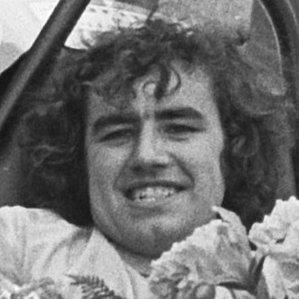
About Brian Henton
Brian Henton: The "Superhen" Who Defied Odds
Brian Henton, born on 19 September 1946 in England, carved out a notable career in motorsport, earning the moniker "Superhen" from the British racing press. Hailing from a modest council house background, Henton's entry into racing was relatively late, commencing at the age of 23. This late start, however, did not deter his ambition, as evidenced by his bold declaration upon winning the minor British Formula Vee championship in 1971: ever-conscious of the value of public relations, he publicly stated his aspiration to become a World Champion. While this ultimate goal remained elusive, Henton's career was marked by significant achievements in the junior categories, laying a foundation of skill and determination.
Early Career Success and F1 Aspirations
Henton's talent quickly became apparent. In 1974, he achieved a remarkable feat by securing victories in both British Formula Three Championships, a testament to his prowess in competitive single-seater racing. This success propelled him towards the higher echelons of motorsport, culminating in his debut in Formula One. Before fully committing to F1, Henton continued to hone his skills in Formula Two, a championship he would later dominate. His early career demonstrated a driver with a clear vision and the ability to perform at a high level, even if his path to the pinnacle of the sport was unconventional and fraught with challenges.
Formula One Debut and Formative Years
Henton's Formula One journey began on 19 July 1975, with a debut for the iconic Lotus team. On paper, this appeared to be a promising opportunity. However, the reality was starkly different. At this juncture, Lotus was experiencing significant internal turmoil, and its machinery was far from competitive. The venerable Lotus 72, once a dominant force, was by then uncompetitive, and its intended successor, the Lotus 76, proved to be a notable failure. This challenging environment meant that Henton, despite his talent, was unable to achieve any concrete results or establish a consistent presence. Between 1975 and 1978, Henton navigated a dual career, participating in both Formula One and Formula Two events. During this period, he even undertook a privateer effort, campaigning a March under his own "British Formula One Racing Team." This initiative underscored his commitment and entrepreneurial spirit, yet it also highlighted the difficulties independent entries faced against established factory teams. Despite his persistent efforts across both categories, Henton struggled to secure a stable foothold, often finding himself in uncompetitive machinery or within teams undergoing significant transitions.
European F2 Championship Triumph and F1 Challenges
The culmination of Henton's efforts in Formula Two arrived in 1980 when he clinched the European Formula Two Championship for Toleman. This significant achievement not only validated his talent but also provided him with a direct pathway back to Formula One. Toleman, recognizing his championship-winning capabilities, brought Henton into their Formula One program for the 1981 season. However, the transition to Formula One with Toleman proved to be exceptionally difficult. The inaugural Toleman-Hart chassis was severely hampered by its design, described as "overweight and underdeveloped." This technical deficit meant that Henton faced an uphill battle from the outset, managing to qualify for only one Grand Prix throughout the entire season. The subsequent year, 1982, saw Henton make unfruitful appearances for both Arrows and Tyrrell, further illustrating the pervasive challenge of securing a competitive drive in Formula One. Across his 38 Grand Prix participations, Henton, unfortunately, never scored any championship points, a statistic that belies his success in junior categories.
A Unique Distinction and Post-Racing Life
Despite the lack of championship points, Brian Henton holds a unique and notable distinction in Formula One history. During his career, he set a fastest lap at the British Grand Prix. This achievement makes him the only driver in the sport's history to have recorded a fastest lap without ever scoring a championship point. It stands as a testament to his raw speed and ability to extract performance, even if circumstances prevented him from converting that pace into tangible championship results. Henton's final Formula One appearance was at the Race of Champions at Brands Hatch in April 1983. This event held historical significance as it marked the last non-championship Formula One race in the modern era, a fitting end to a career that spanned a transitional period in the sport. Following his retirement from active competition, Henton transitioned successfully into business. He initially returned to running a car dealership, leveraging his automotive background. Later, he diversified his interests, moving into property development. In recent years, Henton has further expanded his professional portfolio, venturing into other sectors, most notably engineering. While no longer a full-time competitor, he has occasionally participated in historic racing events, keeping his connection to motorsport alive. Additionally, Henton holds equestrian events at his home, Ingarsby Hall, in Leicestershire, demonstrating a breadth of interests beyond the racetrack. Brian Henton's career, though not culminating in a World Championship, showcases a determined driver who achieved significant success in feeder series and left an indelible, if unique, mark on the Formula One record books.