

BrianGubby
 BritishEntry 1965
Career timeline
Signature numbers
No data available yet.
Era
About Brian Gubby
The Racing Endeavours of Brian Gubby
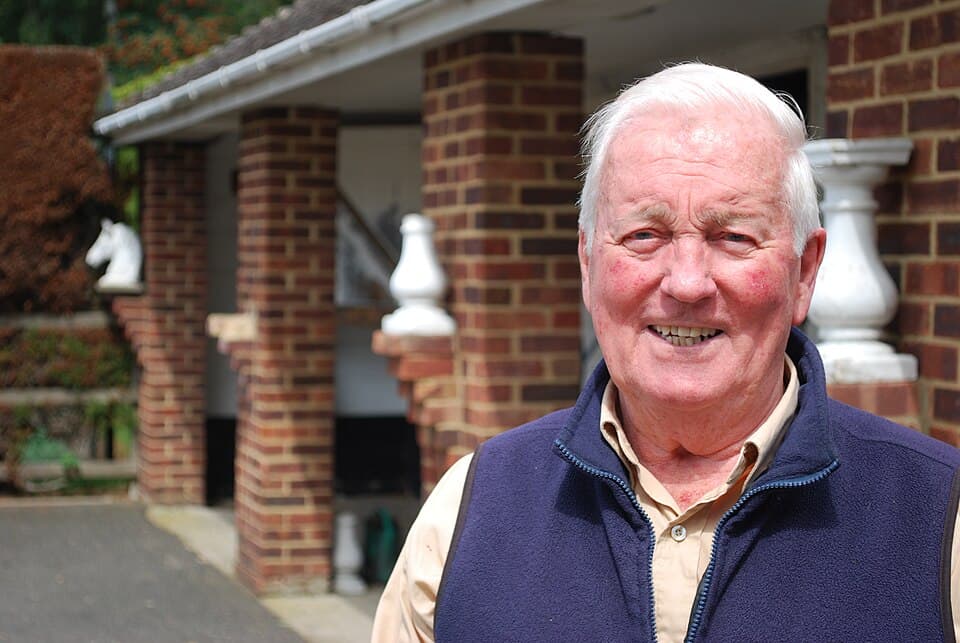
Born on April 17, 1934, in Epsom, Surrey, Brian Gubby embarked on a diverse professional path that saw him transition from a motor racing competitor to a respected racehorse trainer. His journey into the high-stakes world of Formula One, though brief, offers a glimpse into the challenges faced by privateers in the demanding era of 1960s motorsport.
Early Career and Motorsport Foundations
Gubby's professional life commenced after completing his national service in the 1950s, where he established himself as a freelance motor trader. Over time, he expanded his business interests significantly, developing a portfolio that included multiple garages, car showrooms, a hotel, and a building company. This entrepreneurial spirit provided a foundation for his later motorsport ambitions. His entry into competitive motorsport began in rallying, a discipline that honed his car control and adaptability. Gubby then progressed to circuit racing, campaigning a Speedwell-tuned Austin A30 and a potent 3.8-litre Jaguar. The early 1960s marked his transition to single-seater racing, where he competed in Formula Junior. During this period, he piloted a variety of machinery, including a Lotus Eleven, a Lotus 18, and the notably rare Ausper T4. This formative period was not without its stark realities; in 1962, Gubby witnessed a fatal accident at Monte Carlo involving his friend Dennis Taylor. Taylor's car, after touching wheels with Denis Hulme's, tragically crashed into a tree. Gubby recounted the harrowing experience, stating, "I had to dodge all the wreckage and I was nearly sick in the car," an event he later described as the worst accident he had ever seen, underscoring the inherent dangers of the sport during that era.
Progression to Formula Libre and the F1 Ambition
Following his time in Formula Junior, Gubby advanced to Formula Libre, a category known for its open regulations, allowing for a wider array of car specifications. For this venture, he acquired a distinctive dark blue Lotus 24. It was with this car that Gubby achieved notable success, securing victories such as the prestigious Gold Flake Trophy at Leinster and another race win at Phoenix Park. These successes provided the impetus for a significant step forward: the decision to pursue Formula One. His ambition led him to the 1964 Mediterranean Grand Prix at the Autodromo di Pergusa in Sicily, a non-championship Formula One event. Gubby arrived with minimal support, traveling with a very small crew in a Volkswagen pickup, a testament to the privateer spirit of the time. Despite the modest resources, Gubby demonstrated his raw speed during practice, posting the eighth fastest time. Impressively, he outqualified his closest rival, Peter Revson, by a full second. However, his promising debut was cut short by a severe incident. His Lotus suffered a wheel failure, leading to a heavy crash through chainlink fencing. Recalling the fragility of the machinery, Gubby stated, "Lotuses were always falling apart... I ended up upside down in the woods, cocooned in wire with a mouthful of leaves and grass." Demonstrating quick thinking and self-preservation, he managed to disconnect the battery to mitigate the risk of fire. Italian mechanics eventually arrived to extricate him from the wreckage, but the damage rendered him unable to participate in the race. The failed wheel, it was revealed, had been sourced from the BRP team after one of his own wheels had developed a crack, highlighting the resourcefulness and sometimes precarious nature of equipment procurement for independent entrants.
World Championship Attempt and Retirement from Racing
Gubby's only attempt to participate in a Formula One World Championship race came at the 1965 British Grand Prix held at Silverstone. This endeavor, too, was plagued by technical issues during practice. While navigating the challenging Woodcote corner at an estimated 170 mph, his Lotus unexpectedly jumped out of sixth gear. This critical malfunction forced Gubby to manually hold the gear lever in position while attempting to maintain control through the high-speed corner. The severity of this incident, coupled with the inherent risks and the financial strain of competing as a privateer, prompted a profound decision. Gubby chose to retire from the sport immediately, opting not to attend the subsequent day's practice session. He later articulated his rationale, reflecting, "I was driving on a shoestring, and I thought to myself, 'Brian, you've got a family to look after and you'll end up killing yourself.'" Following this definitive decision, Gubby withdrew his entry from the 1965 Mediterranean Grand Prix, an event he had initially planned to contest. His Lotus racing car was subsequently sold to Stirling Moss, who acquired it for use by a film company involved in a project with the iconic actor Steve McQueen, marking a unique end to Gubby's brief but eventful Formula One chapter.
Post-Motorsport Career: Horse Racing
Brian Gubby's life after motorsport took a significant turn, drawing him back to a family legacy. As the son of a jockey, he transitioned into the world of horse racing, establishing himself as a racehorse trainer based in Bagshot, Surrey. This new career path proved to be highly successful and enduring. Among the horses he trained, the sprinter Gabitat stands out as his most successful charge. Gabitat achieved ten victories, including significant Group 3 wins such as the Duke of York Stakes at York in 1984, and the Goldene Peitsche at Baden-Baden in both 1984 and 1985. Gubby's stable also produced other well-known horses like Easy Dollar and Omaha City. More recently, Son of the Cat added to his training accolades by winning the Stewards' Sprint Handicap at Goodwood in July 2011. Gubby's training facilities were extensive, encompassing an 80-acre property equipped with a mile-long all-weather strip and a mile gallop. At the peak of his operations, he maintained a substantial string of up to 16 horses in training, all of which he owned himself. Demonstrating his dedication and hands-on approach, Gubby continued to be actively involved in the daily tasks of his training business well into his late 70s, even personally driving the horsebox, embodying a lifelong commitment to competitive pursuits, albeit in a different arena.