

 British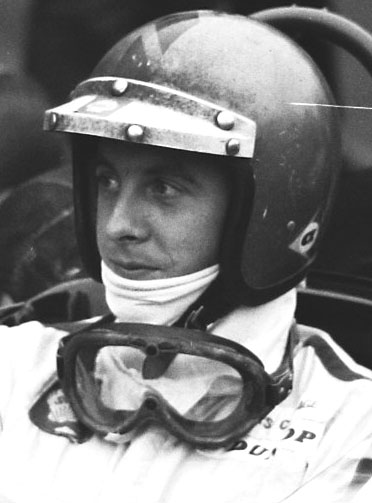
Signature numbers
- Win rate
- 0.0%
- Podium rate
- 6.9%
- Race starts
- 29
- Total points
- 20
Era
About Piers Courage
Origins
Piers Raymond Courage was born on 27 May 1942 in Colchester, Essex, the elder son of Richard Courage, chairman of the great Courage brewing dynasty. Educated at Eton and bound by family tradition for a career in brewing, Piers chose the racetrack instead, defying his father to spend his trust money on a Lotus 7 in 1962. He shared a London flat with Charlie Crichton-Stuart, Jonathan Williams and Frank Williams — the four young men who would shape the next generation of British motor racing — and quickly established himself as one of the fastest of the Formula Junior generation.
Rise
Courage broke into Formula One with the Reg Parnell Racing BRM in 1967 and 1968 — three difficult, slow years where his obvious pace was constantly undermined by inferior machinery. In 1969 his old flatmate Frank Williams started his own racing team, and Frank chose Piers to drive his privately entered Brabham BT26-Cosworth. The combination was magic. Courage took two podiums that year — second at Monaco and second at Watkins Glen — beating works teams from Lotus, Ferrari and Matra in a one-car operation run from a garage in Slough. He outqualified Sir Jack Brabham in his own car at the 1969 South African Grand Prix.
Championship Years
For 1970 Williams made the bold move of switching from Brabham to a new Italian chassis, the De Tomaso 505, designed by Gianpaolo Dallara. The car was beautiful, ambitious and unproven. Early-season races at Kyalami and Jarama produced retirements but flashes of pace. Courage was clearly building towards better results when the team arrived at Zandvoort for the Dutch Grand Prix on 21 June 1970.
Style and Legend
Courage was the gentleman racer made flesh — Old Etonian charm, devastating natural ability, a beautiful young wife (Lady Sarah Curzon, daughter of Earl Howe) and two small sons. He drove with elegance and humour, carried the privateer's banner without complaint, and was universally liked in a paddock not noted for warmth. Frank Williams once said Piers Courage was the only driver he ever loved.
Beyond Racing
On lap 23 of the 1970 Dutch Grand Prix, Courage's De Tomaso suffered a suspected front suspension failure approaching the long Tunnel Oost left-hander. The car speared into the sand bank and flipped, the magnesium chassis igniting on impact and burning ferociously. The fire took hold so quickly that marshals could not approach. Piers Courage died in the cockpit. He was 28. The accident shattered Frank Williams, who attended the funeral and reportedly considered abandoning racing entirely; instead he poured his grief into rebuilding what would eventually become Williams Grand Prix Engineering, the team that would win nine constructors' championships in his memory. Sarah Courage and her sons survived him, and the Courage Trophy in junior single-seater racing in Britain still bears the family name. The 1970 Dutch Grand Prix was the second of three appalling fatalities at Zandvoort that decade, and contributed to the safety reforms that finally began transforming Formula One into a survivable profession. But for the racing world, Piers Courage's death was the moment the romance of the gentleman amateur ended — the brewing heir who chose racing and paid the ultimate price for it.