

 Canadian
Signature numbers
- Win rate
- 0.0%
- Podium rate
- 0.0%
- Race starts
- 1
Era
About John Cannon
John Cannon, a racer who competed under the Canadian banner despite his birth in London, U.K., carved out a notable career across various prominent North American and international motorsport categories. His journey through the USRRC series, the challenging CanAm Series, and the competitive L&M Continental Series, later known as Formula 5000, showcased a versatile talent capable of achieving significant success against formidable opposition. Born on June 21, 1933, Cannon's career spanned several decades, leaving an indelible mark on the racing landscape before his passing on October 18, 1999.
Early Career and North American Dominance
Cannon's early racing endeavors saw him participate in the United States Road Racing Championship (USRRC), where he notably drove for Nickey Chevrolet. During this period, he piloted a Genie/Vinegaroon, a car that benefited from the sponsorship of Dan Blocker, widely recognized for his role in the television series "Bonanza." This initial phase set the stage for his emergence in more high-profile categories. His capabilities truly came to the fore in the inaugural year of the CanAm Series in 1966. Cannon distinguished himself as the top-finishing Canadian driver, an achievement propelled by a strong fourth-place finish at his home circuit, Mont-Tremblant, in the opening event. He replicated this impressive feat two years later, in 1968, a season highlighted by a particularly famous victory. In a very wet race at Laguna Seca, Cannon masterfully overcame the then-dominant McLaren team, securing a win that underscored his skill in challenging conditions. His status as the top Canadian driver in the CanAm series was further reaffirmed in 1973, demonstrating a sustained level of performance throughout the championship's highly competitive era.
Formula 5000 Success and Championship Glory
The L&M Continental Series, a Formula 5000 championship, proved to be a fertile ground for Cannon's talents. In 1969, driving the Malcolm Starr Eagle, meticulously prepared by Tom Jobe and Bob Skinner, Cannon secured multiple victories. He triumphed at iconic American tracks including Riverside, Sears Point, and Mosport, ultimately finishing a commendable fourth in the series standings. The following year, 1970, marked the pinnacle of his Formula 5000 career. Piloting the Hogan-Starr Racing McLaren M-10B, a collaboration between Malcolm Starr and St. Louis trucking magnate Carl Hogan, Cannon delivered a championship-winning performance. His dominant season included further victories at Riverside, Kent, and Elkhart Lake, culminating in the overall series title. This championship victory cemented his reputation as a leading figure in North American open-wheel racing. Following this success, Cannon also competed for Hogan Racing in the 1971 Tasman Series, where he secured a tie for ninth place in the standings, showcasing his adaptability to different racing environments.
Brief Foray into Formula 1 and European Endeavors
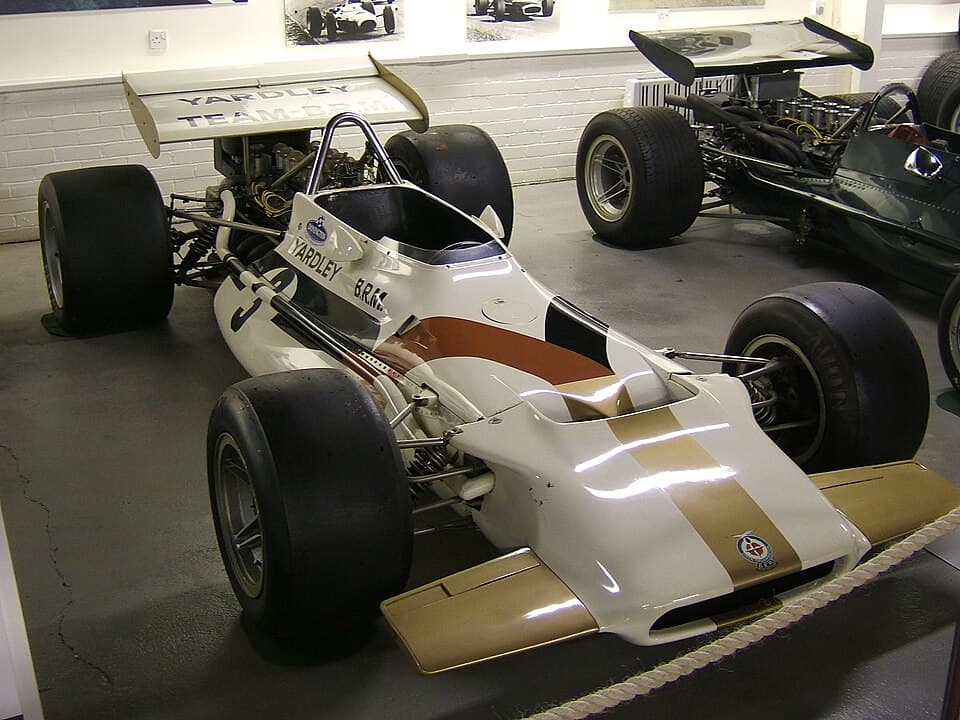
While his primary successes were in North America, John Cannon also made a brief but notable appearance on the global Formula 1 stage. He participated in one World Championship Formula One Grand Prix, the United States Grand Prix at Watkins Glen, held on October 3, 1971. In this singular championship outing, he finished 14th, and as per the points system of the era, he did not score any championship points. Prior to this, he also took part in one non-Championship Formula One race, the Questor Grand Prix, where he finished 12th. Beyond these F1 appearances, 1971 was a year where Cannon also demonstrated his capabilities in Europe. He ran strongly in a number of rounds of the European F2 championship, performances that were noted for "impressing many" within the paddock, suggesting a talent that could adapt to the demanding European circuits and machinery.
USAC Championship Car and Indianapolis 500 Attempts
Parallel to his other racing commitments, Cannon also made 15 starts in the USAC Championship Car series, competing on a part-time basis between 1968 and 1974. His most significant result in this highly competitive series came in 1968, where he achieved a second-place finish in the second race held at Circuit Mont-Tremblant. That same year, he recorded his career-best points finish in the series, placing 27th overall. Cannon also harbored aspirations of competing in the prestigious Indianapolis 500, attempting to qualify for the iconic race in both 1970 and 1974. Despite his efforts, he unfortunately failed to make the race field on both occasions, a testament to the intense competition and challenges of qualifying for the "Greatest Spectacle in Racing."
Later Career and Enduring Competitiveness
In the mid-1970s, Cannon returned to the US F5000 series for the 1975–76 seasons. He campaigned a March 741, which had been modified for F5000 regulations. During this period, he typically ran in the midfield, with his best results including a fourth-place finish at Riverside in 1975 and a sixth-place finish at the same track in 1976, during what were the final US F5000 races. Despite his continued participation, Cannon faced significant challenges. Although he was associated with the Ferrari dealership for Los Angeles, working for Hollywood Sports Cars, financial constraints and engine costs limited his performance in the highly competitive concluding years of US F5000. Nevertheless, his inherent talent remained evident. In 1976, he proved competitive when he contested several rounds of the UK Shellsport F5000/F1/Libre series. Earlier that year, at the start of 1976, he also participated in the Australian F5000 Rothmans series, where he notably secured a victory in the Sandown Park round. His final serious racing appearance came two years later, again in the Australian Rothmans series, at the age of 45. In this outing, he managed to secure a single third-place finish, an achievement attributed "purely on reliability," underscoring his ability to bring a car home in challenging circumstances even in the twilight of his career.
Legacy and Post-Racing Life
John Cannon's contributions to motorsport were formally recognized in 1993 when he was inducted into the Canadian Motorsport Hall of Fame, a fitting tribute to his distinguished career. Beyond his own racing achievements, his legacy extended through his family; his son, Michael, has forged a successful career as a race engineer. Notably, during the 2006 season of the Champ Car World Series, Michael served as the race engineer for A. J. Allmendinger at Forsythe Racing, continuing the family's involvement in high-level motorsport. John Cannon passed away on October 18, 1999, at the age of 66, following a tragic accident. He died after the kit plane he was piloting crashed near Quemado, New Mexico, bringing an end to the life of a respected and versatile racer.