

YasMarina Circuit
Career timeline
Signature numbers
- Career
- 2009 – 2026
Era
About Yas Marina Circuit
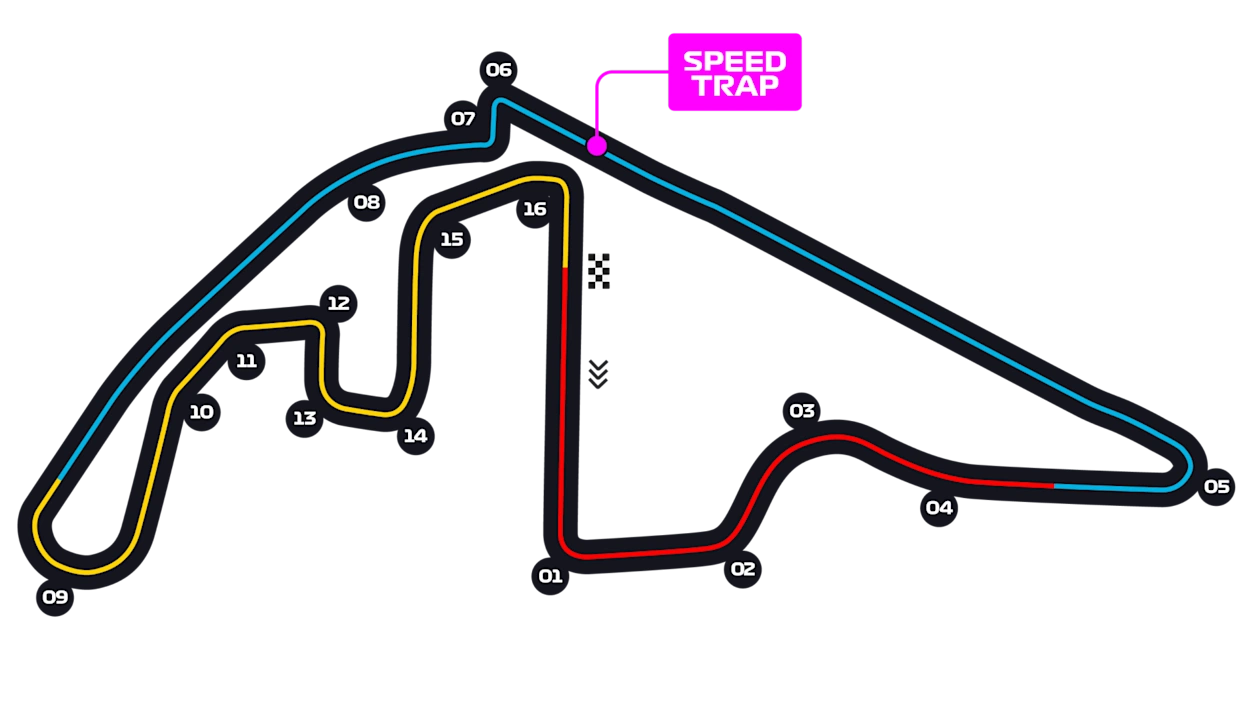
The Yas Marina Circuit, opened in 2009 on Yas Island in Abu Dhabi, is Formula 1's first twilight-to-night race and the calendar's season-finale venue since 2014. A 5.281-kilometre layout that runs under and over the iconic W Hotel — its arches glowing through racing lights — Yas Marina is as much an architectural showcase as it is a racetrack, the centrepiece of the United Arab Emirates' billion-dollar sports-tourism strategy. It has hosted three of F1's most consequential season-ending championships, including the 2010 Vettel breakthrough, the 2016 Rosberg resignation, and the 2021 Verstappen-Hamilton controversy that remains the sport's most-debated finish.
Origins
The circuit was the brainchild of the Abu Dhabi government's Tourism Development & Investment Company (TDIC), part of a $40 billion master plan to develop Yas Island as an international entertainment destination including Ferrari World, the Yas Marina, and a wider tourism complex. F1 was the cornerstone of the strategy. Hermann Tilke designed the circuit to maximise visual spectacle: the W Hotel — a 499-room luxury hotel built directly across the racing line — was specifically designed so that cars pass under its illuminated archway during the twilight start, producing one of F1's most distinctive visual signatures. The hotel cost $250 million and hosts F1 paddock attendees during race weekend. The total Yas Island development cost approximately $40 billion in 2007-2009 dollars, with the F1 facility representing approximately $1.3 billion of that figure. Construction took 26 months and the inaugural race on November 1, 2009 was won by Sebastian Vettel — the first sign of his coming championship dominance. The Abu Dhabi government's hosting contract runs through 2030 and the race has been the season-finale every year since 2014.
Layout
The 5.281-kilometre layout has 16 corners arranged in a configuration that prioritises visual appeal over racing quality — for years it was notorious for producing processional races, a reputation that drove significant 2021 layout revisions. The opening sector winds through the Turn 1-2 left-right combination and the long Turn 5-6 combination that runs alongside the marina. Turn 7 is a long medium-speed left-hander that flows into the long back straight. The 1,180-metre back straight is one of F1's longest, ending at the heavily-braked Turn 8 hairpin where DRS-aided overtaking is common. The 2021 layout revision tightened Turn 5 and made the back-straight braking zone more aggressive — changes that produced an immediate improvement in race quality. The middle sector flows through the marina-front section before reaching the iconic W Hotel underpass at Turns 18-20. The final sector includes the medium-speed Turns 16-17 and the short final straight that returns to the start-finish.
Legendary Moments
The 2010 race was Sebastian Vettel's first F1 World Championship victory, an extraordinary scenario where the Red Bull driver was fourth in the standings entering the race — needing both Mark Webber and Fernando Alonso to finish out of the points. The improbable result occurred when both leaders had strategy failures and Vettel won from pole. The 2016 race was the most personally dramatic in F1 history: Nico Rosberg, having taken the lead in the championship months earlier, needed only to finish on the podium to clinch his first World Title; he came home third behind Lewis Hamilton (who had been deliberately slowing the pace to let other cars catch and pass Rosberg) and Sebastian Vettel. The next morning, Rosberg announced his immediate retirement. The 2021 finale — the most consequential single F1 race of the modern era — saw Max Verstappen and Lewis Hamilton tied on points entering the race; Hamilton dominated until a late safety car for Nicholas Latifi's crash; Race Director Michael Masi's controversial decision to release only the cars between Verstappen and Hamilton (rather than all lapped cars, as protocol dictated) put Verstappen on Hamilton's gearbox with one lap remaining. Verstappen, on fresh soft tyres, overtook on the first racing lap to become World Champion. The result remains hotly disputed. The 2024 race was Lando Norris's third career victory and the moment when McLaren clinched their first Constructors' Championship since 1998 — a statement-of-intent finale to the Verstappen era.
Quirks & Curiosities
The W Hotel's underpass is one of only two F1 circuit features where cars pass under a permanent occupied building (the other is the Monaco casino tunnel, which is below the casino's gardens, not the building itself). The hotel's illuminated arches change colour during the race to reflect race conditions and have become one of F1's most recognisable visual signatures. The track lighting system uses approximately 4,300 individual light fixtures arranged in a custom pattern designed to eliminate shadow "blackouts" during cars' transitions through the curves. The system draws approximately 1.4 megawatts of power and is among the most sophisticated track lighting systems in motorsport. The Yas Marina venue includes Ferrari World — an indoor amusement park featuring the world's fastest roller coaster (Formula Rossa, 240 km/h) — within walking distance of the F1 paddock. F1 drivers routinely test the roller coaster during race weekend. The Abu Dhabi Grand Prix is one of the longest-attended races by British and European fans, with the November date and tax-free status making it a popular destination for European F1 enthusiasts. The race weekend is typically one of the calendar's hottest hospitality events, with rooms in the W Hotel selling for over £10,000 per night.
Modern Era
Yas Marina has hosted the F1 season-finale every year since 2014, a position that has made it culturally important even when the race quality was poor. The 2021 layout revisions — which removed the slow chicane sequence after the back straight and added more overtaking-friendly braking zones — produced an immediate improvement in race quality. The Abu Dhabi government's commitment to F1 has been sustained across multiple regimes and economic cycles, and the contract through 2030 is one of the longest-term in F1. The race has become both the calendar's season-finale and a key social event in the F1 community, with the post-race "after party" at Yas Marina drawing nearly the entire paddock.