

LosailInternational Circuit
 QatarLusailEntry 2021Active
Career timeline
Signature numbers
- Career
- 2021 – 2026
Era
About Losail International Circuit
History and Evolution
The Losail International Circuit, nestled on the outskirts of Doha, Qatar, stands as a testament to modern motorsport engineering and a beacon of ambition in the Middle East. Inaugurated in 2004, its primary purpose was to host the inaugural MotoGP Grand Prix of Qatar, marking the first time a motorcycle Grand Prix was held in the region. Designed by Hermann Tilke's firm, the circuit quickly established itself as a premier venue for two-wheeled racing, renowned for its fast, flowing layout and its distinctive floodlighting system, which enabled spectacular night races from 2008 onwards. While MotoGP remained its staple, Losail's infrastructure and design always hinted at its potential for four-wheeled motorsport. This potential was fully realized in 2021 when it made its debut on the Formula 1 calendar, stepping in as a replacement during the COVID-19 pandemic, and then securing a long-term contract from 2023 onwards. The circuit underwent significant upgrades to meet FIA Grade 1 standards for Formula 1, including resurfacing, new pit buildings, and enhanced spectator facilities, solidifying its place in the pinnacle of motorsport.
Circuit Layout and Engineering Challenges
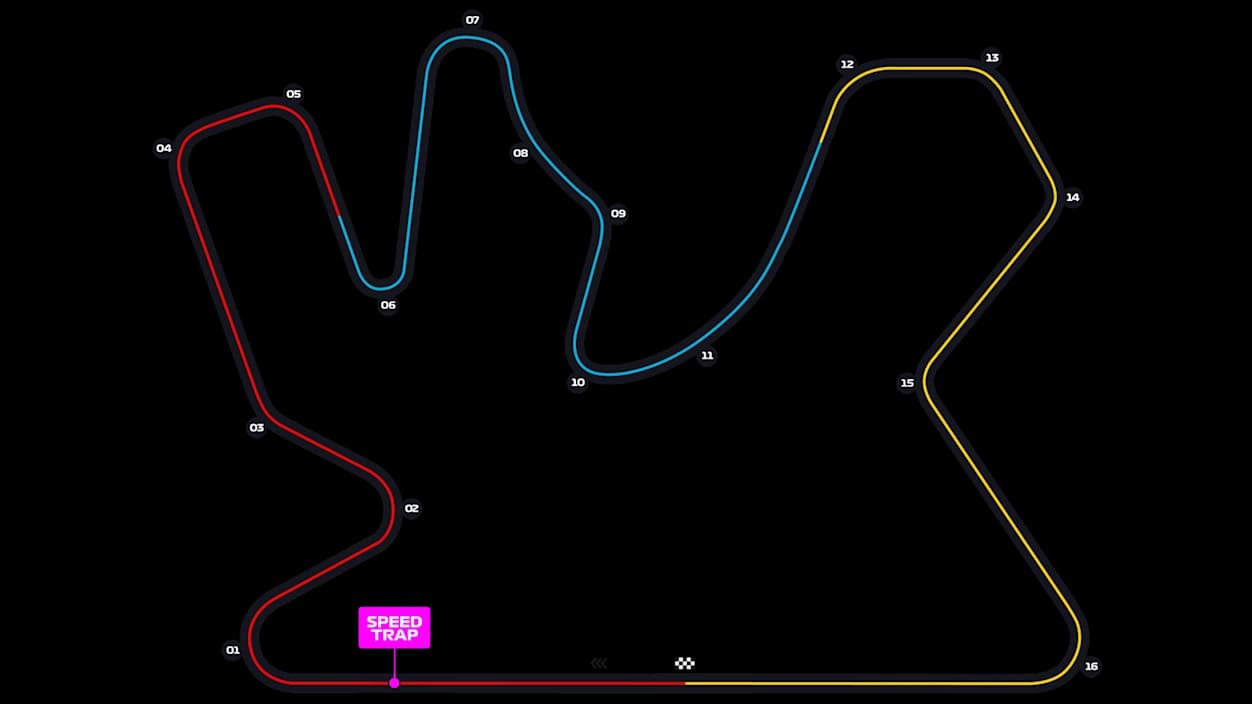
Spanning 5.380 kilometers (3.343 miles) with 16 corners, the Losail International Circuit is characterized by its high-speed nature and a demanding sequence of medium to fast corners. Despite its desert location, elevation changes are minimal, making it a relatively flat track where cornering speed and aerodynamic efficiency are paramount. The circuit's layout encourages a rhythmic flow, but its technical demands are significant, particularly for tire management and driver stamina. **Sector 1:** The lap begins with the colossal 1.068-kilometer (0.664-mile) main straight, one of the longest on the F1 calendar. This flat-out blast provides the primary overtaking opportunity into Turn 1, a heavy braking zone from over 330 km/h down to around 100 km/h. This right-hander is crucial for a strong exit onto the subsequent fast left-right flick of Turns 2 and 3, which demand precision and commitment. The car's stability under braking and traction out of Turn 1 are key performance differentiators here. **Sector 2:** This middle sector is a technical challenge, comprising a series of medium-speed corners from Turn 4 to Turn 11. It's a relentless sequence that tests the car's aerodynamic balance and the driver's ability to maintain momentum. Turns 4 and 5 form a quick left-right, followed by the tighter Turn 6. The subsequent Turns 7-8-9-10-11 create a flowing, high-commitment section where a strong front end and consistent grip are vital. Maintaining a high minimum speed through these corners is essential for lap time, placing significant lateral loads on the tires and demanding excellent chassis rigidity. **Sector 3:** The final sector is arguably the most demanding, featuring a high-speed sweep through Turns 12, 13, and 14, leading into the tight Turn 15 and the final Turn 16. This sequence is taken at very high speed, requiring exceptional aerodynamic downforce for stability and confidence. Turn 12 is a long, sweeping right-hander that puts immense stress on the left-hand tires. The exit of Turn 16 is critical as it feeds directly onto the main straight, emphasizing the need for strong traction and a clean exit to maximize top speed down the pit straight. Any loss of momentum here is severely punished. **Surface Characteristics:** The asphalt at Losail is known for being quite abrasive, particularly after a resurfacing, which contributes to high tire wear. Furthermore, the desert environment means that sand can be blown onto the track, especially early in the weekend, reducing grip and making the surface 'green' and slippery. This necessitates careful car setup to manage both mechanical and aerodynamic grip effectively.
Aerodynamics and Tyre Demands
Losail is predominantly a medium-to-high downforce circuit. While the long main straight might suggest a lower downforce setup, the numerous fast and medium-speed corners, particularly in the demanding Sector 2 and the high-speed sweeps of Sector 3, necessitate significant aerodynamic grip. Teams typically aim for a balanced setup that provides stability through the fast corners without incurring excessive drag on the main straight. The active aerodynamics introduced in 2026 will play a crucial role here, allowing for optimized wing angles for both straight-line speed and cornering performance. Tyre degradation is a major factor at Losail. The abrasive asphalt, coupled with the high ambient temperatures and the relentless series of high-speed corners, puts immense stress on the Pirelli compounds. The rear tires, in particular, suffer from both thermal degradation due to the high traction demands and abrasive wear from the long, sweeping corners. The left-hand tires bear a significant load, especially through Turn 12. This often leads to multi-stop strategies and requires drivers to manage their tires meticulously throughout a stint. The 2023 race saw several drivers exceeding track limits due to tire wear, highlighting the extreme demands.
Overtaking and DRS
The primary overtaking opportunity at Losail is unequivocally at the end of the main straight, into Turn 1. The sheer length of the straight, combined with a heavy braking zone, allows for slipstreaming and late braking maneuvers. The circuit features a single DRS zone along this main straight, with the detection point just before the final corner (Turn 16). While Turn 1 offers the best chance, the fast, flowing nature of the rest of the track makes overtakes challenging elsewhere. The new 'overtake mode' and active aerodynamics in 2026 are expected to enhance overtaking opportunities, potentially making other braking zones, like Turn 6, more viable if a car can get close enough through the preceding corners.
Environmental Factors
The desert climate of Qatar presents unique challenges. High ambient temperatures and humidity, even during night races, place significant physical demands on drivers and stress the car's cooling systems. Wind can also be a factor, particularly crosswinds on the main straight and through the fast corners, which can destabilize the car and affect aerodynamic balance. Furthermore, sand blown onto the track can reduce grip and increase abrasive wear on tires and brake ducts, requiring teams to adapt their strategies and car setups accordingly. The 2023 race highlighted these extreme conditions, with several drivers suffering from heat exhaustion.
Notable Moments and Future Outlook
Losail's Formula 1 debut in 2021 saw Lewis Hamilton dominate, securing a crucial victory in his championship battle. The 2023 return was particularly memorable, not only for Max Verstappen sealing his third World Championship in the Saturday Sprint but also for the extreme physical challenge posed by the heat and humidity, which pushed drivers to their limits. The race also saw strict enforcement of track limits due to the high-speed nature and tire degradation. The circuit's long-term contract ensures its continued presence on the F1 calendar, and with its modern facilities and unique night racing spectacle, Losail is poised to remain a significant and demanding challenge for drivers and engineers alike, especially with the new 2026 regulations emphasizing power unit efficiency and active aerodynamics.
Lap Record Breakdown
The current official F1 lap record at Losail International Circuit is 1:23.196, set by Max Verstappen in a Red Bull Racing RB19 during the 2023 Qatar Grand Prix. This lap showcases the immense speed achievable with modern F1 machinery, particularly through the high-speed corners of Sector 3 and the sheer power delivery on the main straight. The new 2026 regulations, with their revised power units and active aerodynamics, are expected to initially result in slightly slower lap times as teams adapt to the new technical paradigm, but continuous development will likely see records challenged again in subsequent seasons.