

Hungaroring
 HungaryBudapestEntry 1986Active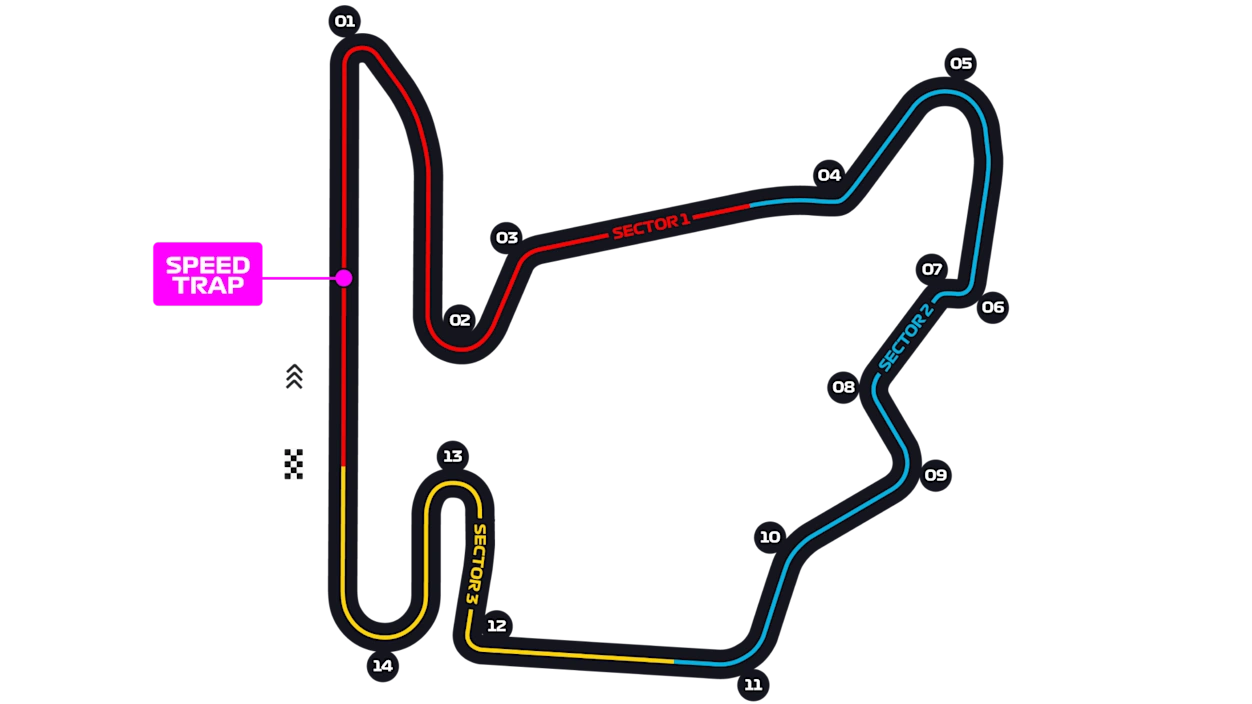
Career timeline
Signature numbers
- Career
- 1986 – 2026
Era
About Hungaroring
The Hungaroring, opened in 1986 in the rolling hills 19 kilometres north-east of Budapest, was the first Formula 1 circuit built behind the Iron Curtain and remains one of the sport's most enduring summer fixtures. Often described as "Monaco without the walls," its tight 4.381-kilometre layout with limited overtaking opportunities has produced races that are either brilliantly tactical chess matches or processions, with little in between. In its 39-year history it has hosted some of the sport's most unexpected winners — Damon Hill nearly stole 1997 in an Arrows, Jenson Button took a maiden victory in 2006, Esteban Ocon scored Alpine's only modern win in 2021 — making it the calendar's reliable producer of storylines.
Origins
In 1985, Hungarian Communist Party leader János Kádár signed off on a deal with Bernie Ecclestone to bring F1 to Hungary, making it the first World Championship race held in a Warsaw Pact country. Ecclestone had spent three years in negotiations with the Hungarian government — at one point exploring a street circuit in Budapest's People's Park — before settling on a purpose-built greenfield site in Mogyoród. Construction took just eight months, beginning in October 1985 and finishing in early summer 1986 in time for the August inaugural race. The pace was extraordinary by F1 standards and was achieved through intensive use of military engineering battalions and 24-hour shifts. The first race on August 10, 1986 drew approximately 200,000 spectators — many had crossed from Czechoslovakia, East Germany, and Yugoslavia just to see Western motorsport — and was won by Nelson Piquet's Williams. The Hungarian government bought a 25-year hosting contract that has since been extended multiple times; the most recent renewal runs through 2032 and includes a planned $80 million pit-and-paddock renovation that broke ground in late 2024.
Layout
The 4.381-kilometre circuit is technical and twisty, with 14 corners crammed into a layout that gives only one significant straight (the main start-finish, 908 metres). The downhill plunge to Turn 1 — a 90-degree right at the bottom of a slope — is the only obvious overtaking opportunity, and it has produced more passes than any other single corner on the circuit. The middle sector winds through a series of medium-speed lefts and rights that reward smooth, mistake-free driving but offer almost no overtaking. Turns 4-5 form a fast esses sequence; Turn 8 is a long right-hander where understeer is common; Turn 11 is a constant-radius sweep where keeping the throttle pinned is essential. The final sector includes the slow Turn 12 hairpin and the long Turn 13-14 sequence that leads back onto the main straight. The 2003 layout revisions extended the back straight slightly and tightened the final chicane to encourage more passing, with mixed results.
Legendary Moments
The 1989 race produced one of the great drives of Nigel Mansell's career, a recovery from 12th on the grid to victory in his Ferrari, with his most famous overtake — passing Ayrton Senna's McLaren around the outside of the slow Turn 1 with three lapped cars between them — still shown in highlight reels today. The 1997 race remains one of F1's great might-have-beens. Damon Hill, in an Arrows-Yamaha that had qualified anywhere from 9th to dead last all season, dominated the entire race in conditions that suited his chassis perfectly — only for a hydraulic failure on the penultimate lap to drop him to second behind Jacques Villeneuve. Hill's stoic post-race interview ("It would have been nice") is F1 lore. The 2006 race delivered Jenson Button's maiden F1 victory in his 113th start, a wet-dry spectacular where Button gambled on slicks before any other front-runner and stormed past Pedro de la Rosa's hapless McLaren to win. The 2021 race produced Esteban Ocon's only career victory — a chaotic race that began in heavy rain with a multi-car pile-up that eliminated seven cars, then dried out to give the Alpine driver a remarkable defensive drive against Sebastian Vettel's recovering Aston Martin.
Quirks & Curiosities
The Hungaroring is the only F1 circuit located in a former Warsaw Pact country (Slovakia briefly hosted in 1980s F2 but never F1). For three decades it was the only "Eastern" venue, until Sochi joined the calendar in 2014 and Baku in 2016. The Hungarian Grand Prix is famously called "the easy holiday race" by F1 paddock staff because Budapest is one of the cheapest and most walkable European F1 cities — paddock crews routinely take Sunday night flights and treat the weekend as an extended summer holiday. The circuit is known for being the "dustiest" track on the calendar because it sits unused for most of the year — only the F1 weekend, a single national-championship round, and occasional track days fill the schedule. Cars routinely lap 2-3 seconds slower in Friday practice than in Sunday's race. The 2003 race was held under unusual conditions when local farmers protested the EU's agricultural policy by parking tractors near the circuit gates; police eventually cleared the access roads but the incident drew international attention to Hungary's pre-EU-accession politics.
Modern Era
The Hungaroring has its contract extended through 2032, and a major renovation of the pit-and-paddock complex is currently underway — ground broke in October 2024 on a $80 million project that will modernise the garage facilities, build a new media centre, and upgrade hospitality areas. The circuit layout itself will remain unchanged. The race traditionally falls on the first weekend of August, which makes it the last race before F1's mandatory three-week summer break. This timing has given it cultural significance as the moment when championship leaders consolidate or chasers strike — Lewis Hamilton's 2018 dominant win at the Hungaroring effectively decided that year's title race in early August. The summer-break timing also makes it one of the better-attended weekends with families on holiday filling the grandstands.